A rich variety of indoor botanical species
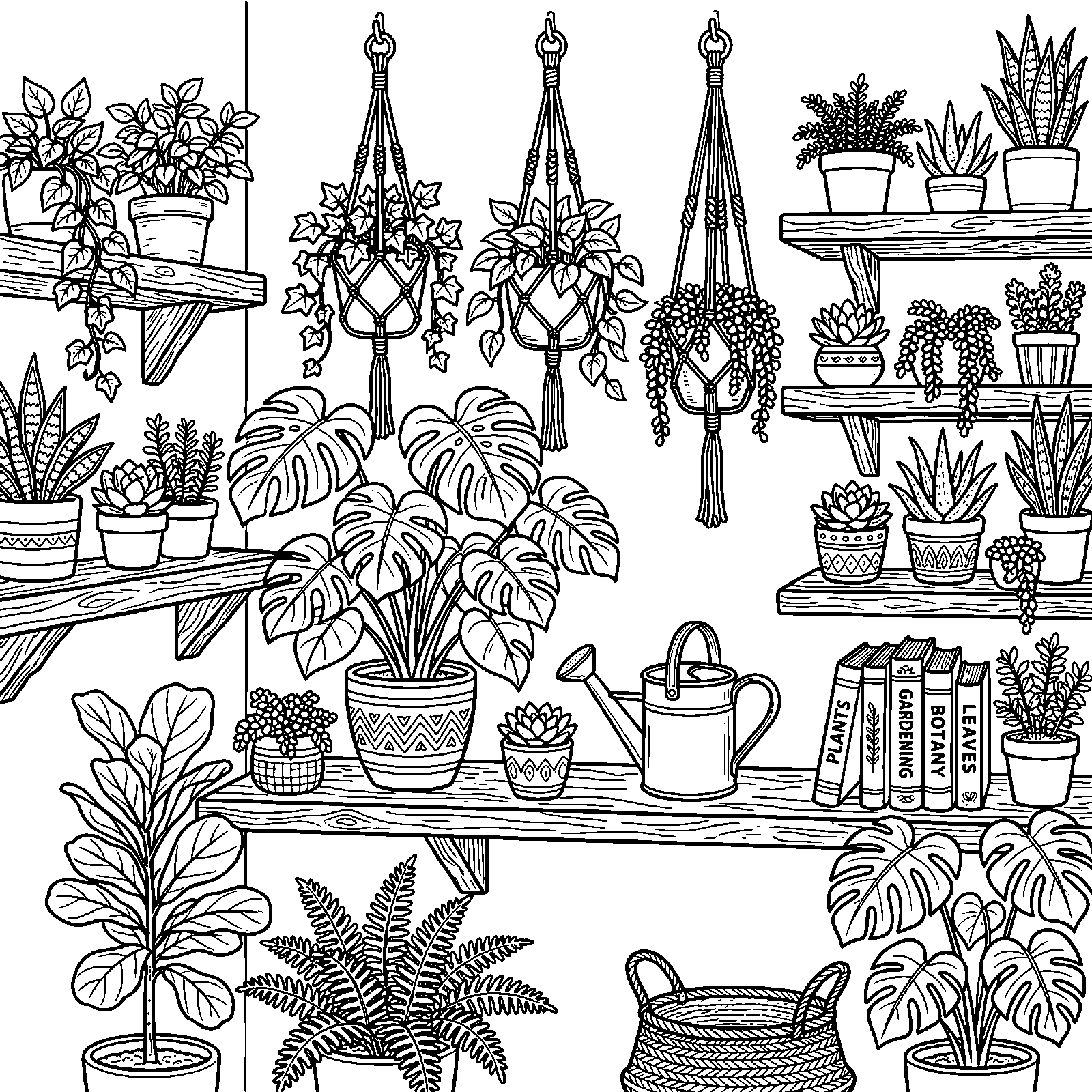
This coloring page is an absolute paradise for plant lovers, aspiring florists, and urban gardeners. From the top shelf, graceful trailing vines spill downward in heart-shaped foliage cascades that drape across wooden uprights. The centerpiece is a magnificent Swiss cheese monstera showing its iconic leaf cutouts, surrounded by textured ceramic planters decorated with geometric ribbing, small pebble trays, and tender succulent rosettes. The terracotta pots feature saucer trays and drainage lip lines that ground each vessel on the wooden planks, while hanging macrame cords display knotted diamond patterns that invite subtle shading between the rope fibers.
An artistic challenge for older kids and teens
Ages ten and up will enjoy the wide spectrum of natural greens this illustration invites. No two leaves need look the same: colorists can experiment with blending chartreuse, olive, bright lime, deep pine, seafoam, and emerald tones, discovering how subtle yellow and blue undertones bring botanical art to vibrant life while cultivating observation skills.
Getting the cleanest print at home
Select the PDF version matching your printer setup (US Letter or international A4) and print at actual size without auto-fit reduction. For those wanting to mix colored pencils with watercolor markers on the leafy fronds, a smooth ninety-pound cardstock will prevent cockling and keep lines crisp throughout coloring, preserving every delicate leaf outline.
Shading techniques for botanical depth
Color the young, emergent leaves in bright apple green with yellowish tips, saving dark hunter green and deep viridian for the older leaves tucked into the shadows behind. For the planters, celebrate handcrafted pottery by alternating earthy terracotta clay, speckled cream glazes, dusty peach, and bold cobalt blue accents. Try introducing warm wood grain streaks on the shelving units using raw sienna and burnt umber to create a rustic, earthy frame that makes the green foliage pop with remarkable vibrancy.
The wellness benefits of indoor houseplants
Living with indoor plants improves ambient air quality, reduces mental fatigue, and fosters patience and mindfulness in everyday life. Watching a newly unfurled monstera leaf expand over several days brings a quiet joy that scientific botanical illustrators have documented with watercolors for generations, inspiring serene creativity in personal art journals.