Winged equine anatomy and soaring cloudscape rhythm
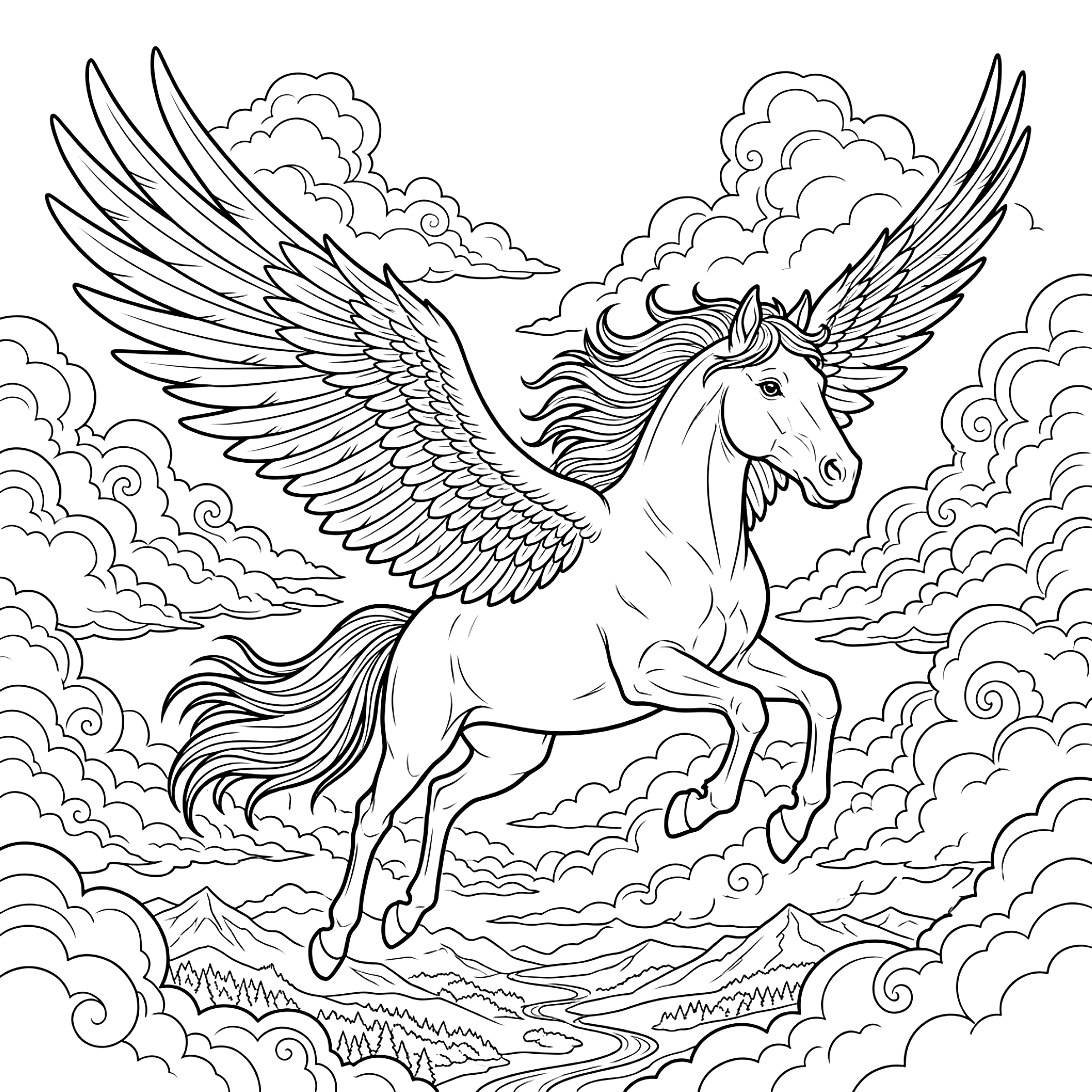
The artwork captures the muscular power of the galloping winged horse, showcasing flowing mane tresses, arched neck carriage, and two expansive wings layered with distinct flight and cover feathers. Circling cumulus clouds frame the stallion, creating thrilling high-altitude flight motion. The vast alpine horizon showcases jagged snow-capped peaks and daylight constellations twinkling with argent starlight, emphasizing the celestial origins of the immortal winged steed. Clean mountain winds ruffle the stallion’s silky mane, making each individual lock of hair ripple with untamed grace against the clouds.
Inspiring project for young horse and myth lovers
Tailored for children aged seven and older, teenagers, and equestrian art enthusiasts. Coloring the interplay between horse musculature and delicate feathered wings fosters patient hand pressure and an intuitive understanding of animal anatomy in motion.
Printing instructions for crisp winged linework
Utilize the vector PDF download for crystal-clear outlines on standard sheets at full scaling. Sturdy drawing paper around one hundred thirty grams allows smooth blending of subtle wing shadows without paper warping.
Shading tricks for pearlescent coats and sky depths
Shade Pegasus in silvery alabaster with whisper-soft cerulean and lavender undertones sculpting the chest and flank muscles. Highlight the wide feather rows in icy cyan blending into crisp white tips, surrounding the aerial steed with deep cobalt blue sky. To shade white feathered wings without muddying the tones, use light cool grey pencils strictly beneath feather overlaps, leaving feather tips pristine white paper. Adding a hint of soft celestial blue along the flank highlights the divine muscular anatomy.
The sacred fountain of Hippocrene and poetic inspiration
In ancient Greek lore, wherever Pegasus struck the earth with his golden hooves, miraculous freshwater springs bubbled forth, such as the sacred spring of Hippocrene on Mount Helicon. Since antiquity, poets and dreamers have revered Pegasus as the divine patron of creative vision.