Mechanical engineering of Hydraulic construction excavator
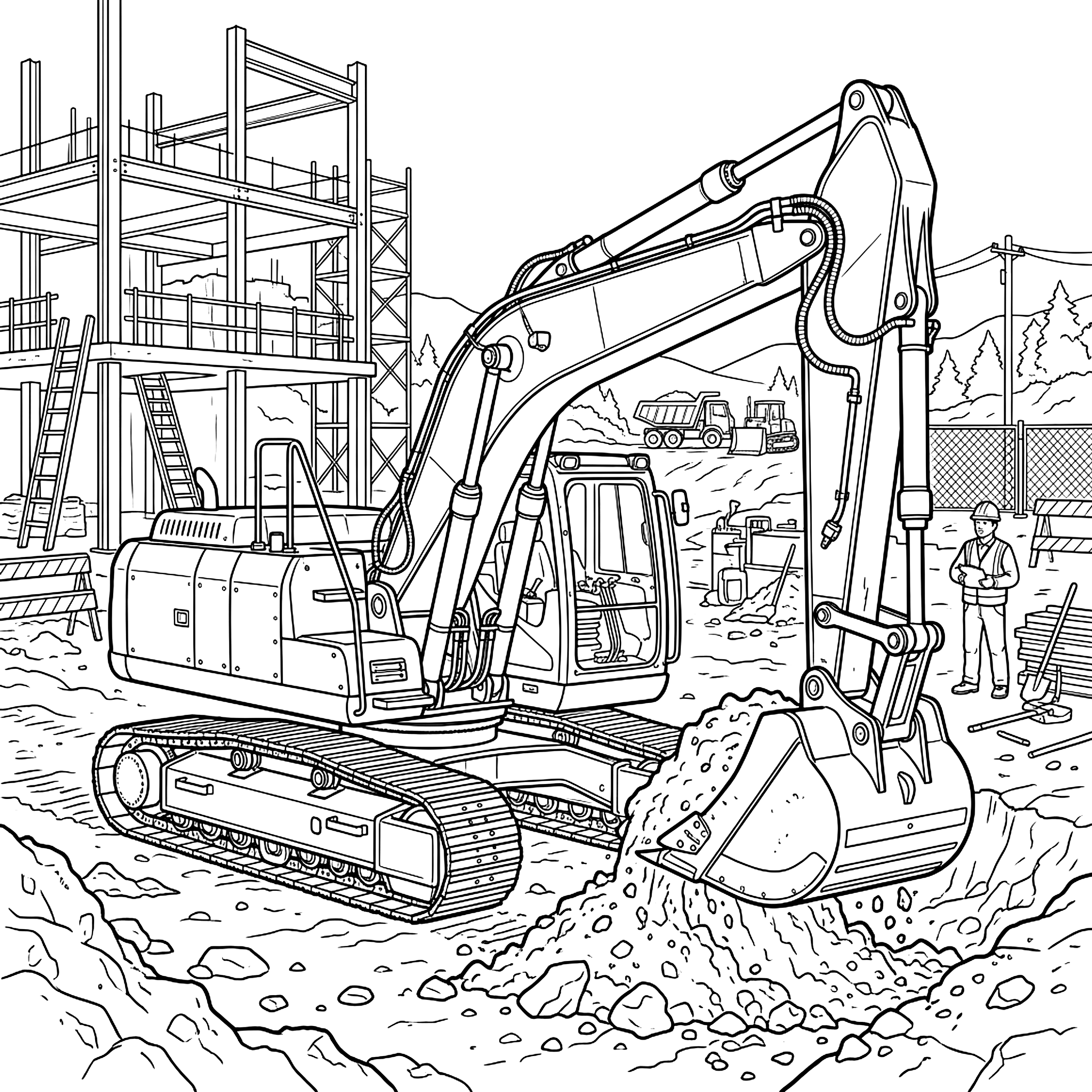
This heavy-duty hydraulic tracked excavator digs through rocky terrain during foundation excavation work on a bustling civil engineering site. The powerful digger features an articulated two-piece boom and dipper stick powered by heavy chrome hydraulic cylinders, terminating in a reinforced steel digging bucket equipped with wear-resistant ground-engaging teeth. The fully rotating superstructure encompasses an ergonomic safety-glass cab, roof protection grilles, and high-intensity work spotlights resting upon heavy continuous caterpillar track frames. A massive cast-steel counterweight mounted to the rear of the revolving upper carriage counterbalances the boom, preventing the heavy machine from tipping when hoisting heaped rock buckets. Armored steel sleeve guards encase high-pressure hydraulic lines to prevent puncture damage from jagged blasted boulders.
Recommended age range for Hydraulic construction excavator
Engineered for colorists aged ten to fourteen drawn to the raw mechanical leverage of heavy civil machinery. The articulated hydraulic cylinders and toothed steel bucket provide rich scope for simulating realistic jobsite wear.
Printable PDF download for Hydraulic construction excavator
This heavy construction excavator vector PDF is configured for crisp home printing on standard Letter and A4 stock. Deep vector boundaries ensure reliable ink containment when using felt tips, wax crayons, or colored pencils.
Coloring tips for Hydraulic construction excavator
Iconic safety highway yellow or industrial safety orange reign supreme on the main boom arm and counterweight bodywork. For the gleaming hydraulic ram rods, render crisp dove grey accented with stark longitudinal white shine highlights. The heavy bucket teeth and lower caterpillar tread assemblies look thoroughly authentic rendered in dark charcoal slate with stippled touches of earthy raw umber to mimic jobsite dust coating the steel. For realistic wear on the bucket teeth, blend bare metallic silver with rust brown along leading cutting edges where abrasive stone contact grinds away stock factory paint. Outlining the individual track pad pins with dark graphite pencil conveys immense tracked machine weight.
History and technical heritage of Hydraulic construction excavator
Early steam shovels broke ground on massive civil undertakings like the Panama Canal during the turn of the twentieth century. With the widespread adoption of high-pressure fluid hydraulics in the 1950s, modern excavators gained astonishing fingertip sensitivity, allowing heavy machinery operators to manipulate multi-ton rock boulders with human-like dexterity.