Mechanical engineering of Historic steam train locomotive
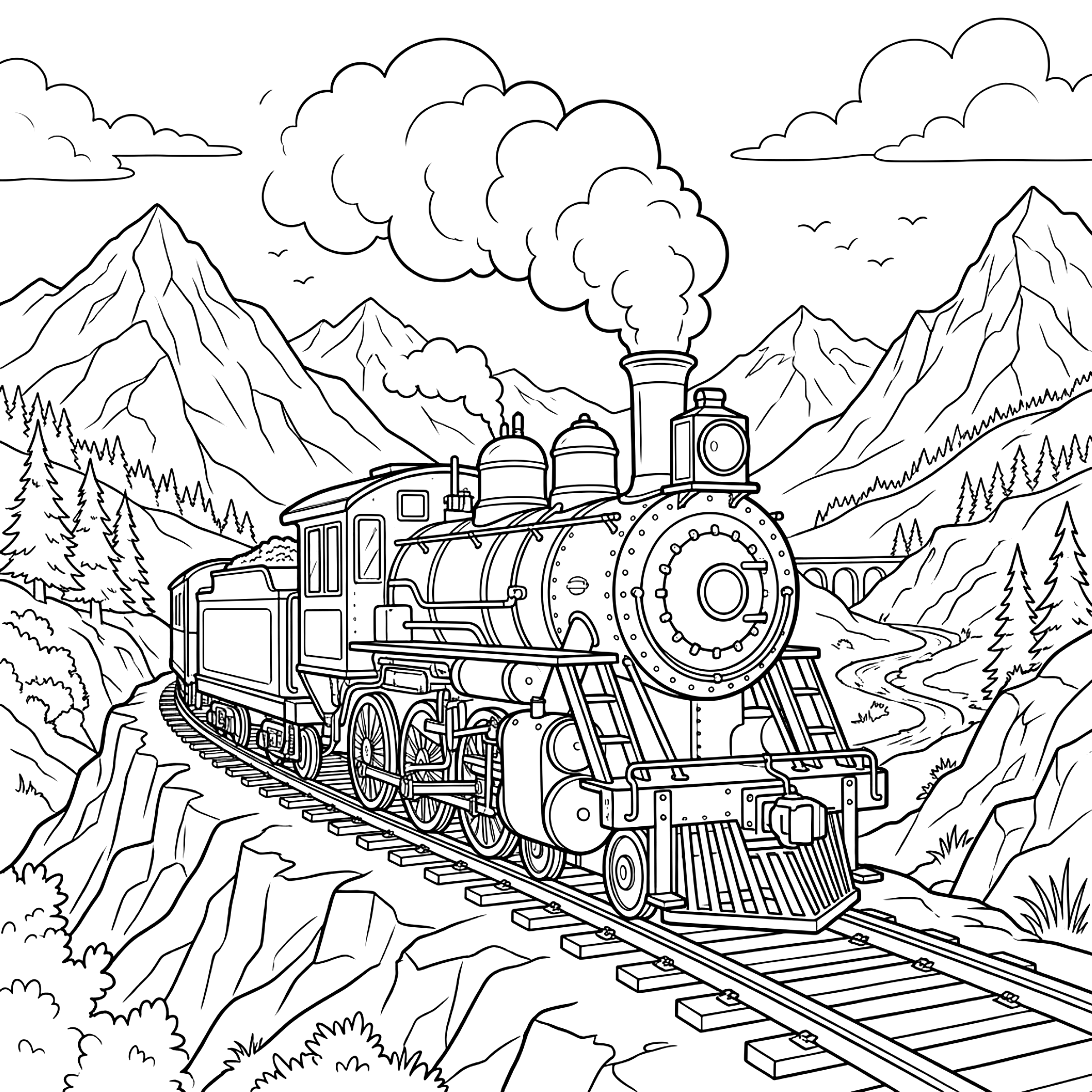
This majestic nineteenth-century steam locomotive powers across a rugged timber trestle bridge nestled high among pine-clad mountain peaks. The iron horse features a heavily riveted cylindrical boiler, an authentic flanged smokestack puffing dramatic clouds of white steam, and a prominent glowing front lantern. Up front, an angled cowcatcher plow clears the steel rails, while the coal tender and polished driving side rods establish an intricate mechanical tableau that will enchant vintage railway modelers. Polished brass steam pressure gauges and heavy regulator levers line the open cab backhead, enabling the intrepid engine crew to monitor boiler pressure along steep alpine inclines. Up front, the heavy riveted smokebox door provided railway firemen convenient access to clear accumulated coal soot.
Recommended age range for Historic steam train locomotive
Designed for young railway enthusiasts aged ten to fourteen who admire nineteenth-century heavy engineering. The riveted boiler plates and voluminous steam billows provide rich practice with metallic sheen and soft atmospheric blending.
Printable PDF download for Historic steam train locomotive
This classic steam train printable vector PDF is prepared for seamless home printing on standard Letter and A4 stock. Deep vector lines ensure effortless boundary control whether using colored pencils, fineliners, or markers.
Coloring tips for Historic steam train locomotive
The massive iron boiler looks magnificent in satin black or deep hunter green, accented with polished brass boiler rings, whistle, and warning bell shaded in warm honey gold. Render the front cowcatcher and heavy wheel rims in dark charcoal slate. For the billowing steam clouds, apply whisper-soft dove grey and powder blue in interior crevices, preserving pristine white highlights on the outer billows to mimic fluffy sunlight-dappled steam plumes. To recreate the rich metallic luster of iron boiler cladding, shade soft black along curved flanks and buff with a cotton swab to establish a velvety cast-iron sheen. Accentuate the polished brass bands securing the boiler using warm canary yellow and fine ivory highlights.
History and technical heritage of Historic steam train locomotive
The steam locomotive propelled the Industrial Revolution forward, allowing bulk raw materials and travelers to traverse vast continental distances at speeds once deemed impossible. The sprawling rail networks forged through alpine gorges and wilderness frontiers shaped the growth of modern cities and laid foundations for modern international commerce.