Compositional highlights
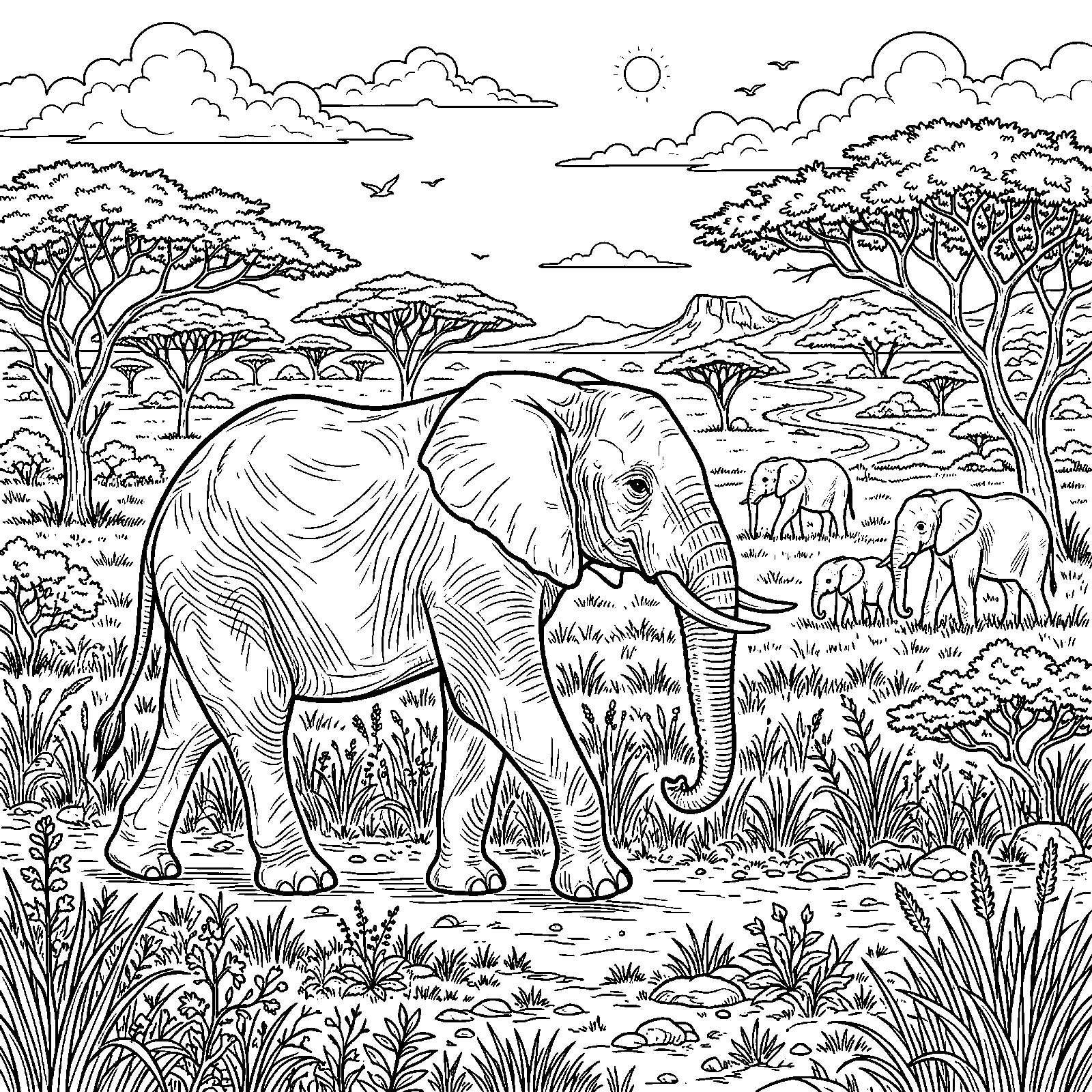
Depicted in a dynamic three-quarter stance, the elephant displays its expressive face and gracefully curved trunk. The fan-shaped ears reveal delicate vascular ridges etched along their edges, while the massive body exhibits genuine wrinkled skin patterns. Low prairie grass clumps and smooth pebble stones ground the animal securely on the terrain. Rounded toenails along the broad foot pads offer fine details for close-up shading.
Skill development for older kids
Designed specifically for the ten-to-fourteen age group, this sheet emphasizes tonal variation over bright primary colors. Shading a monochrome subject teaches young artists how pressure control, cast shadows, and paper white preservation create tangible weight and roundness without relying on chromatic contrast. It serves as an excellent study for aspiring sketch artists.
Getting the best printable result
Save the PDF corresponding to your regional paper standard and verify that print size is set to actual scale. If you intend to blend graphite pencils or smudge charcoal shadows, select a toothy medium-weight drawing paper that grips dry pigments without smearing across delicate lines. A 160 gsm surface allows repeated lifting with a kneaded eraser without fiber scuffing.
Techniques for dimensional skin folds
Avoid flat battleship gray: warm up the hide with dusty beige highlights across the brow and cool slate undertones underneath the belly. Keep the curved tusks bright ivory by leaving the center bare and shading only their lower underside with very light cream or warm beige. Yellow ochre grasses in the foreground provide an earthy contrast that flatters the animal’s cool tones.
Anatomy insights from the bush
African elephants possess thousands of individual muscles throughout their versatile trunks, allowing them to strip tree branches or pluck delicate leaves with equal precision. Their expansive ears serve as biological heat radiators, circulating blood through thin skin surfaces to stay cool during sweltering midday temperatures. Family herds are guided by experienced matriarchs who remember ancient migratory pathways across hundreds of miles of terrain, demonstrating an extraordinary memory that mirrors their gentle emotional bonds.