What the drawing includes
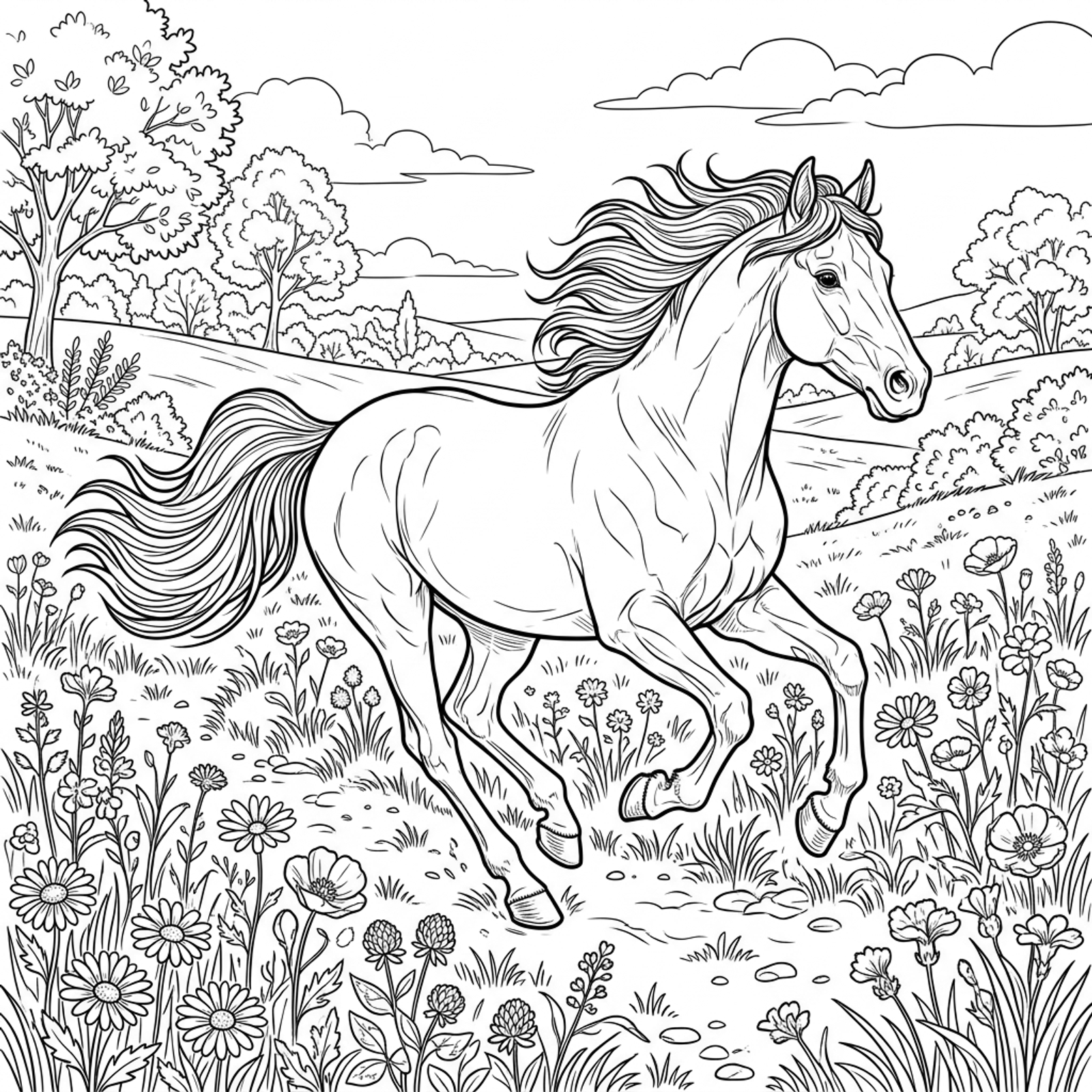
The horse fills most of the paper and is seen from the side, legs off the ground in the middle of its stride. Muscles in the neck, chest and hindquarters are traced with soft lines, and the mane forms long strands that float backward. Below, a meadow of flowers in many sizes gives you a chance to pair bright colors with the calmer tones of the animal.
Who this page suits
It works well from ten to fourteen. Coloring a horse takes a little observation, because proportions and muscles matter more than on other animals, but the outlines guide you nicely. It is a common choice for kids who ride or are curious about horses, and for anyone who wants to practice showing motion in a picture.
Getting a clean printout
Download the Letter or A4 PDF and send it to print at one hundred percent. Most home printers handle it well in standard quality. If you are going to color with markers, use heavier paper and slide a spare sheet underneath so ink cannot stain the table.
Color ideas for the horse
Real coats offer plenty to choose from: a bay with a dark mane, a dappled gray, a coppery chestnut or a pinto with big white patches. Try coloring each strand of the mane in a slightly different shade to suggest wind. Muscles stand out when you darken the edges a little and keep the center lighter.
Light and shadow for a horse with volume
The trick horse painters use is deciding where the light comes from. If you picture the sun high on the left, the back and neck get more light, while the belly and the right-side legs fall into shadow. First color the whole surface in the base tone, then add the dark tone with long strokes that follow the shape of each muscle. A touch of warm color inside the shadows keeps the animal from looking like plastic.