Cephalopod anatomy and curling suction-cup tentacles
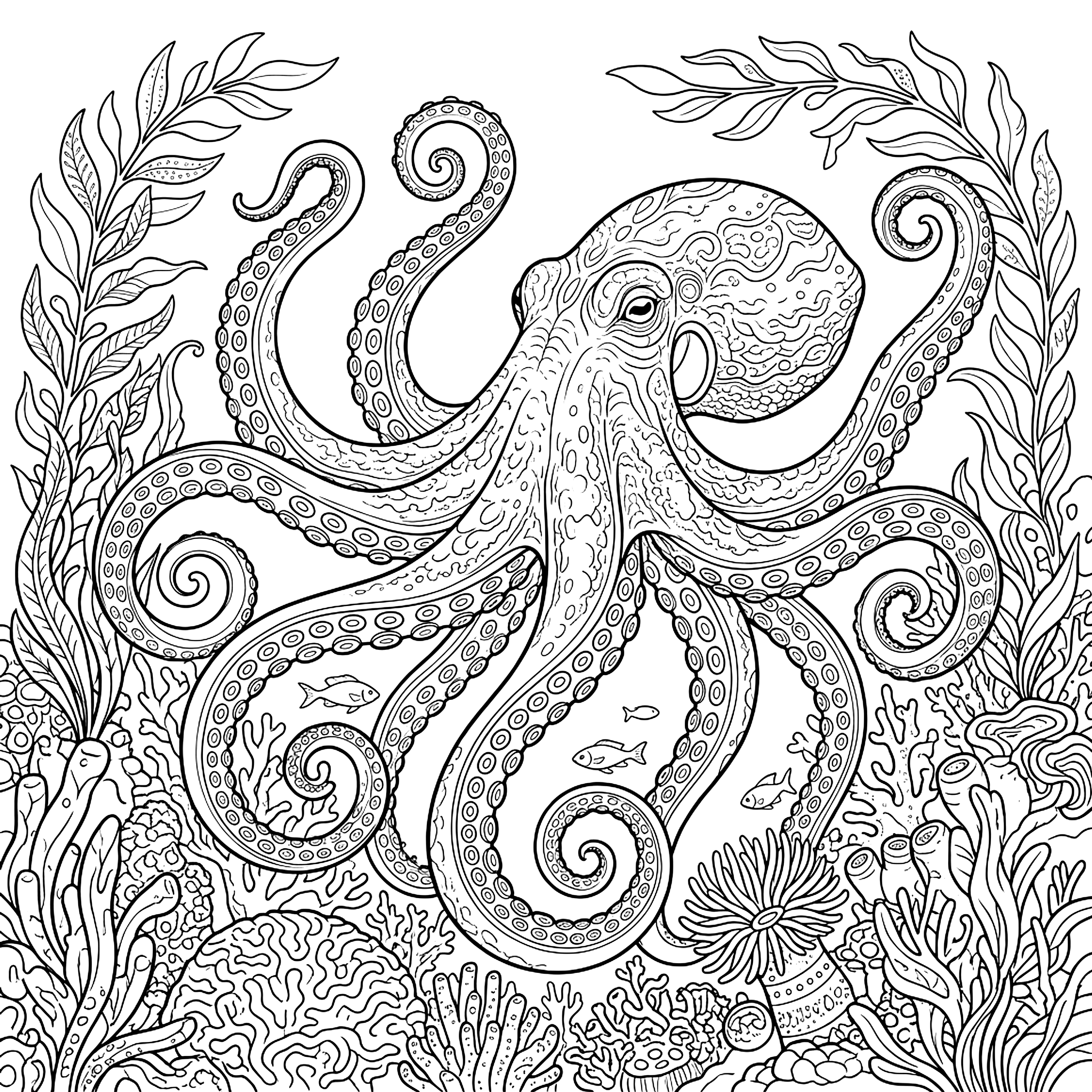
The artwork highlights the smooth dome-like mantle, observant horizontal pupil, and flowing rhythm of eight tentacles spiraling naturally through open water. Concentric suction cups form an engaging pattern along arm underbellies, framed by branching staghorn corals, sea stars, and floating seaweeds. The observant, intelligent gaze peering between branching coral formations reflects the insatiable curiosity of one of the ocean’s wisest invertebrates. Curling tentacle tips guide the eye through dynamic underwater choreography. The circular suction cups arranged symmetrically along each tentacle demonstrate nature’s genius for tactile exploration. Swimming clownfish and sea anemones complete this rich coral habitat.
Mindful coloring challenge for grade schoolers and teens
Suited for kids aged seven and older, teenagers, and marine life lovers. Coloring the repeating rows of circular suction cups trains hand stability and patience, while the surrounding coral garden invites imaginative tropical color combinations.
Printing instructions for crisp underwater line work
Download the vector PDF to ensure high-definition contours on standard US Letter or A4 sheets. Using heavy art paper around one hundred and twenty grams prevents marker bleeding when layering saturated marine blues and vibrant reef tones.
Creative palette tricks for luminous underwater scenes
Shade the octopus in fiery coral orange, deep magenta, or electric crimson, filling suction-cup interiors with creamy butter yellow. Paint the surrounding coral reef in chartreuse, turquoise, and violet, layering deep marine navy across the deep water background. Layer deep ultramarine and cobalt blue across the ocean depths to create electric contrast against the octopus’s vivid coral or magenta body. Highlighting individual suction cup rims with pale amber adds stunning three-dimensional presence.
Three hearts and extraordinary decentralized brain power
Octopuses possess three functioning hearts and copper-rich blue blood tailored for frigid ocean depths. Remarkably, two-thirds of their neurons reside within their flexible arms, allowing each tentacle to taste, explore, and manipulate objects semi-independently.