Key components of the illustration
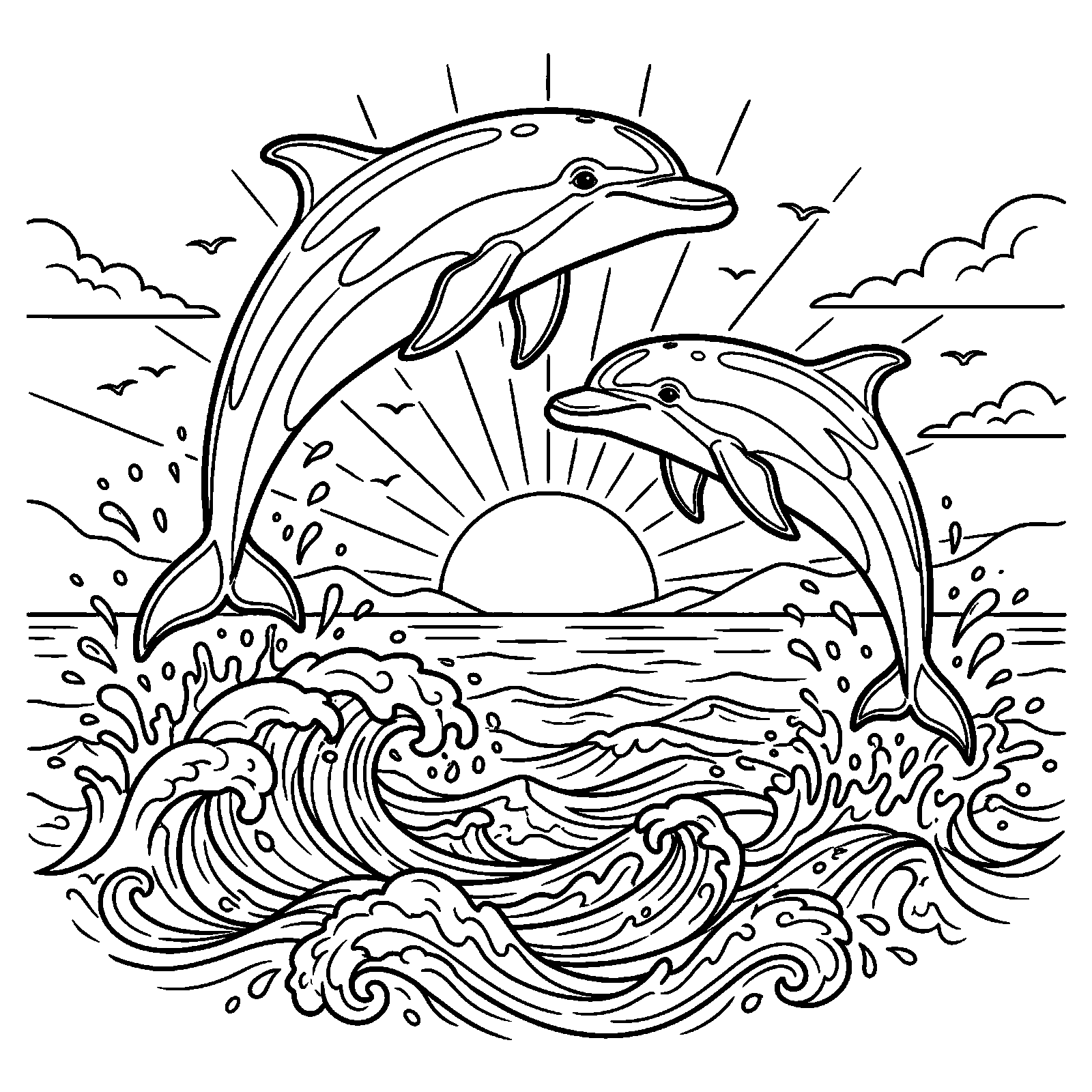
The two marine mammals crisscross mid-air with streamlined snouts, curved blowholes, and sickle-shaped dorsal fins drawn with anatomical care. Below them, a breaking ocean swell unfurls curled foam ribbons, while horizontal tide lines and a sunset circle frame the uplifting scene. Fine arc-like spray lines follow the trajectory of their jump, giving kinetic rhythm to the entire page. Tiny fish scatter below the rolling waves as the graceful creatures glide effortlessly through the evening sea breeze.
Why ages ten to fourteen love this sheet
Dolphins radiate joyful energy that appeals instantly to preteens and teens seeking relaxing, feel-good artwork. The clean curving outlines encourage fluid arm motions, giving colorists the freedom to experiment with tropical sunset gradients and iridescent marine hues without feeling constrained by rigid boxy shapes.
Ensuring top print quality
Select your preferred Letter or A4 PDF file and print at full scale with borderless or minimum margin settings. If you plan to experiment with watercolor washes or blender markers for the sky and water, print on 160 gsm mixed-media paper to prevent buckling. Smooth paper also allows colored pencil pigments to blend seamlessly without toothy grain.
Atmospheric sunset ideas
Blend horizontal bands of mango orange, blush pink, and lavender across the twilight sky, casting warm pink reflections along the wet skin of the dolphins. Reserve untouched paper white for the splashing water droplets to create dazzling highlights in the spray. Under the crest of the wave, layer dark indigo to contrast sharply with the foaming white crest.
Marine biology notes on dolphin acrobatics
Dolphins frequently leap out of water during fast travel to conserve swimming energy, as moving through air produces significantly less hydrodynamic drag than pushing through seawater. These playful breaches also serve to communicate coordinates with distant pod members across choppy surf. Intriguingly, dolphins sleep with only one brain hemisphere at a time, keeping one eye open to watch for obstacles while continuing to surface regularly for fresh oxygen.