Aquatic adaptations and clever shell-cracking tools
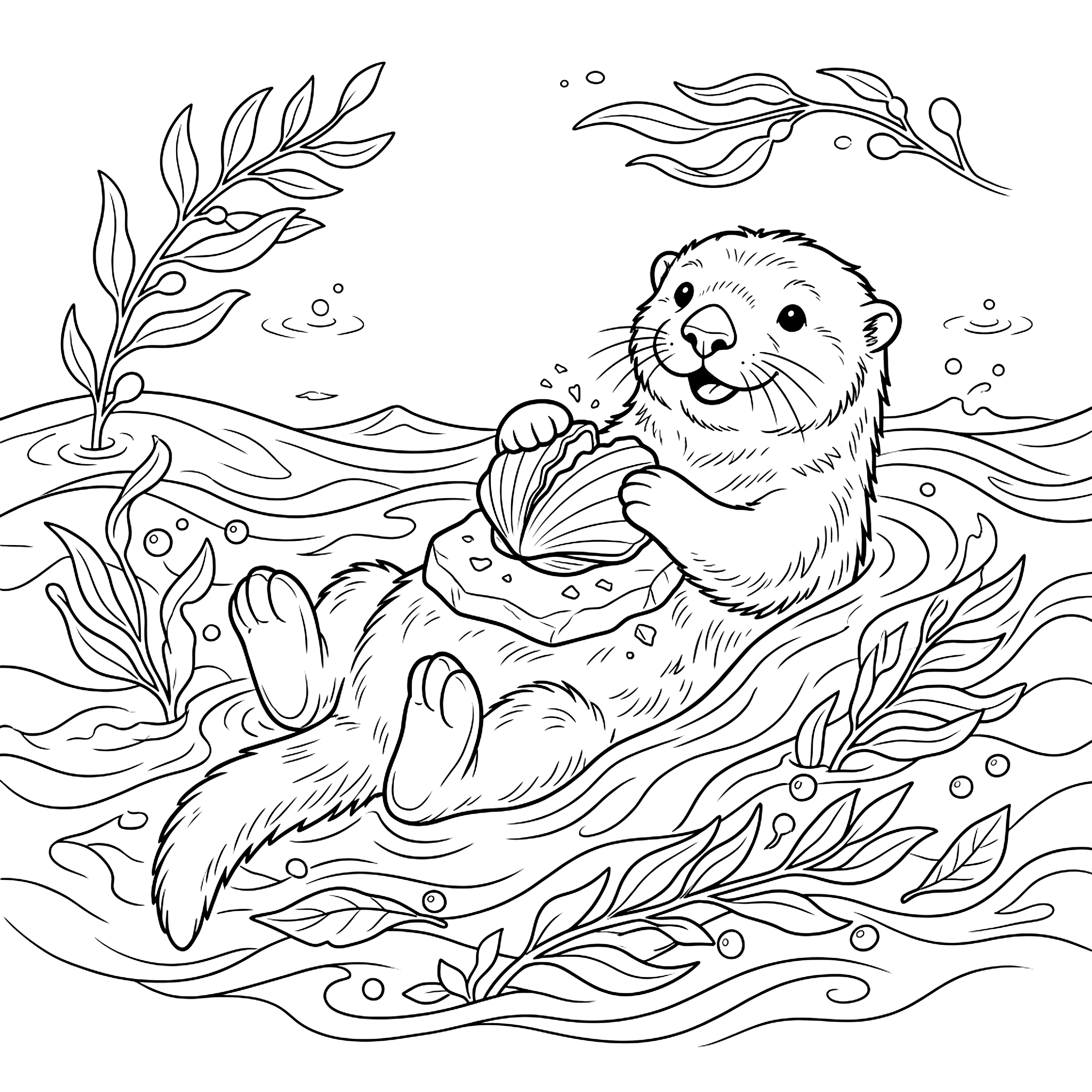
The artwork captures the buoyant floating posture of the otter, complete with sensitive whisker pads, paddle-like hind flippers, and a clam shell cradled between furry front paws. Wavy giant kelp ribbons and ocean foam bubbles frame the scene with vibrant oceanic rhythm. Concentric water ripples lapping gently against the floating sea otter convey its relaxed buoyancy along coastal Pacific swells. Tangled kelp ribbons frame the mammal with authentic marine vibrancy.
Approachable ocean adventure for early elementary kids
Tailored for children aged five through twelve, this page blends friendly rounded character art with fluid water contours. Kids enjoy applying rich marine hues, building hand coordination through flowing wave strokes and playful animal details.
Paper recommendations for coastal ocean art
Download the vector-optimized PDF layout for crisp lines on Letter and A4 pages. A standard drawing paper around one hundred and twenty grams supports colored pencils, wax crayons, or washable markers without bleeding through the sheet.
Coloring recommendations for buoyant fur and ocean swell
Shade the otter’s wet pelt in warm espresso brown, transitioning to soft cream and honey tan across the smiling face and chest. Wash the rolling ocean waves in aquamarine, turquoise, and sky blue, tinting the drifting giant kelp in olive green and amber. Color the clam shell in pearlescent pastel lilac, ivory, and soft sand to make it look like a freshly gathered bivalve harvested from ocean reefs.
The densest fur on Earth and stone tool mastery
Lacking insulating blubber like whales, sea otters rely on the densest fur coat in the animal kingdom, boasting nearly one million hairs per square inch that trap air bubbles for warmth. They are also among the rare non-human animals known to use stones as anvils to crack open shellfish.