Masters of the ancient skies above the waves
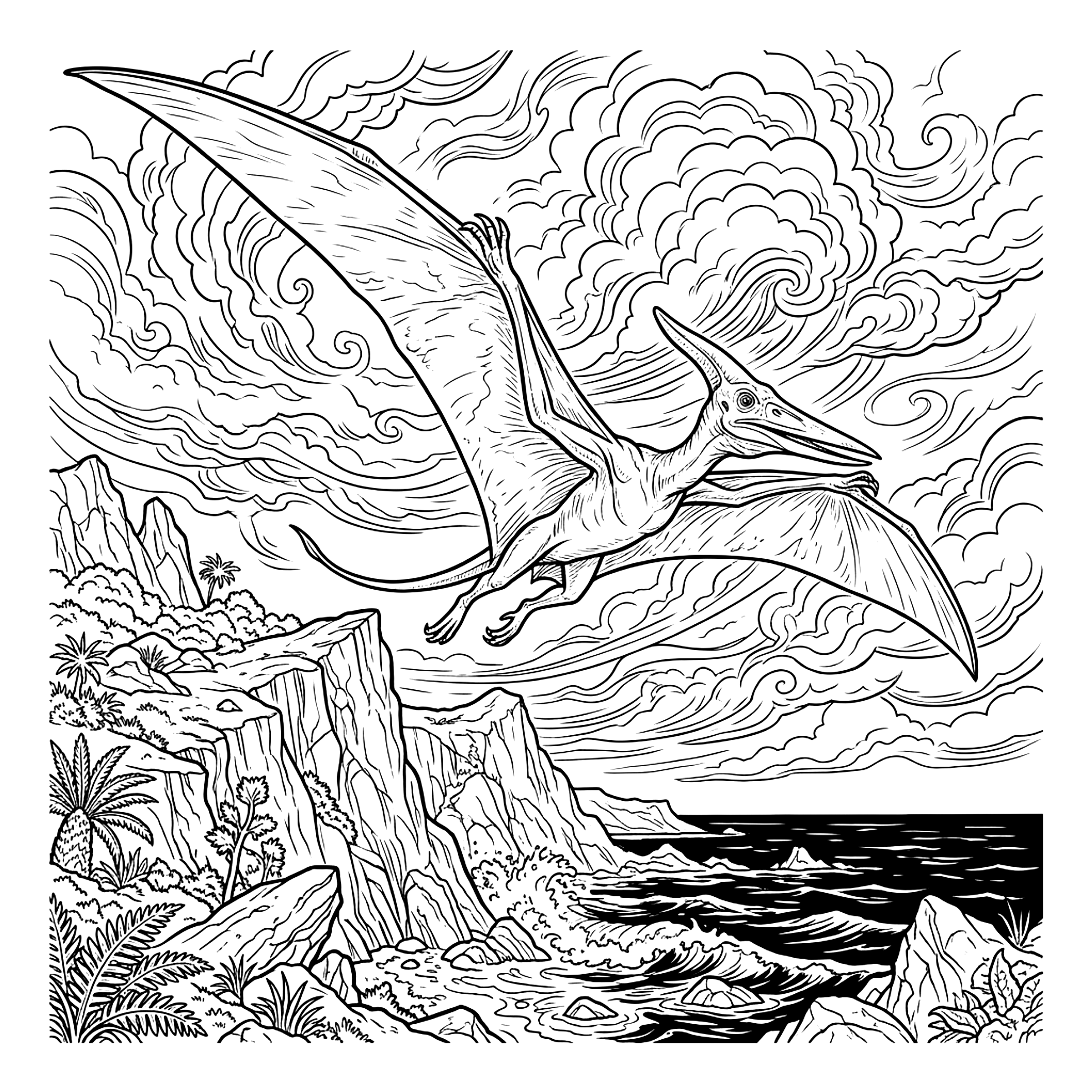
This coloring sheet captures the aerodynamic grace of prehistoric flying reptiles. The expansive wing membranes feature delicate skin furrows attached to the elongated fourth finger. Below, stratified sea cliffs and foaming ocean breakers add dramatic motion and depth to the vista. Expansive wing membranes supported by lengthened fourth digits reveal structural flight fibers capable of riding thermal updrafts effortlessly. Subtle ripples across the ocean surface and sweeping cliff ledges invite creative colorists to experiment with varied atmospheric perspective techniques.
An exciting aerial project for ages 8 to 14
Great for developing artists who enjoy action scenes and atmospheric skies. The combination of swirling clouds, rugged rock ledges, and broad wing spans allows colorists to experiment with dynamic lighting and vivid crest colors.
Clean print guidelines for home studios
Download your free PDF in standard Letter or A4 format. Crisp vector lines ensure that delicate wing textures and rock formations remain distinct and ready for colored pencils or fine felt-tip pens.
Wing membrane shading and coastal color ideas
Color the reptile body in warm cinnamon or stormy blue-gray, giving the wing membranes a translucent golden amber or peach tone. On the prominent head crest, paint a streak of fiery crimson to suggest an eye-catching aerial display. Create a dramatic dusk horizon by painting banded sunset gradients of purple crimson and gold behind smoking volcanic peaks.
The very first vertebrates to achieve powered flight
Pterosaurs were the earliest backboned animals to master true powered flight using flapping wings, evolving millions of years before birds or bats and ruling prehistoric skies for over one hundred and sixty million years. Pterosaurs achieved powered vertebrate flight through hollow pneumatic bones that coupled featherweight agility with aerodynamic rigidity, soaring effortlessly above ancient coastlines in search of fish.