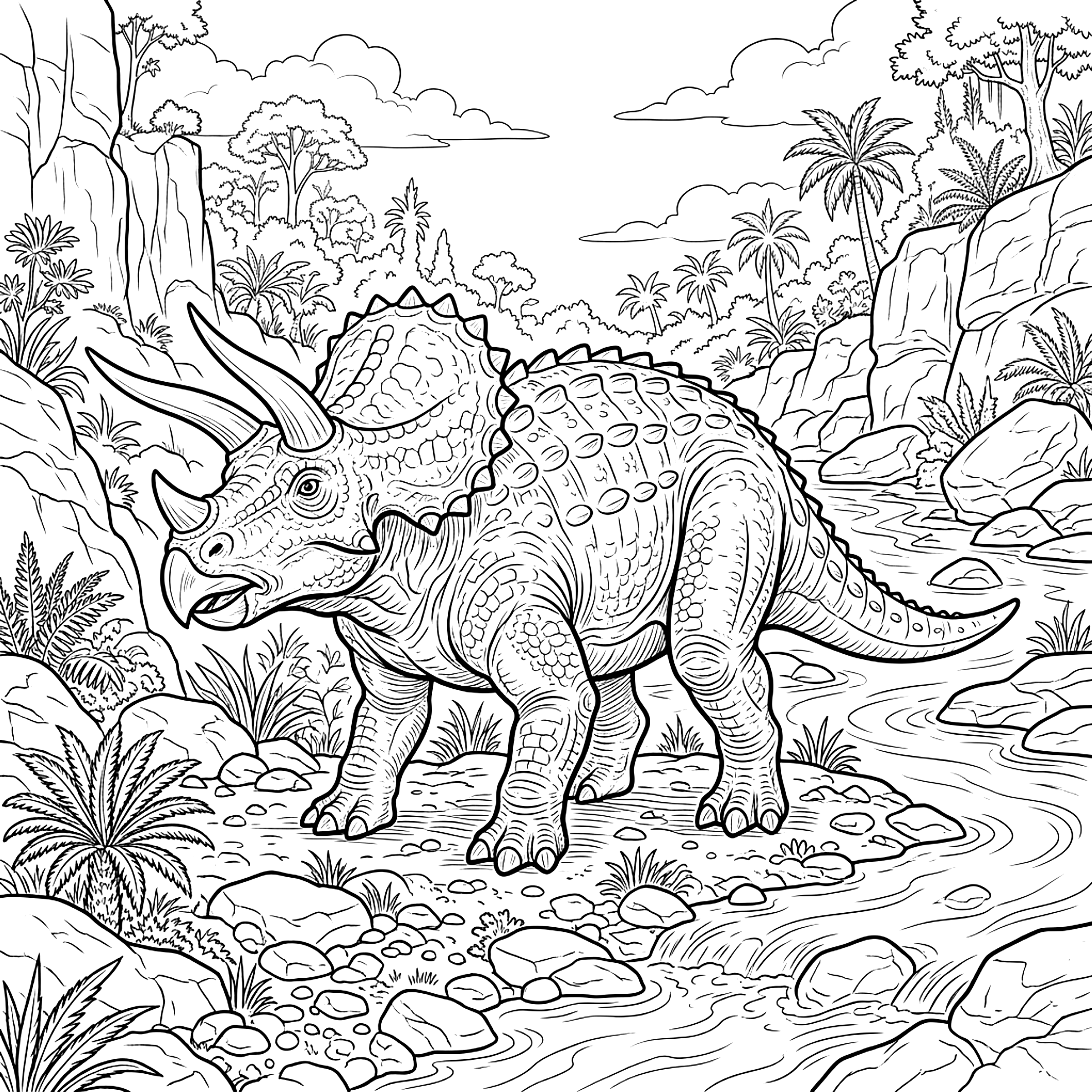
Details of stegosaurus
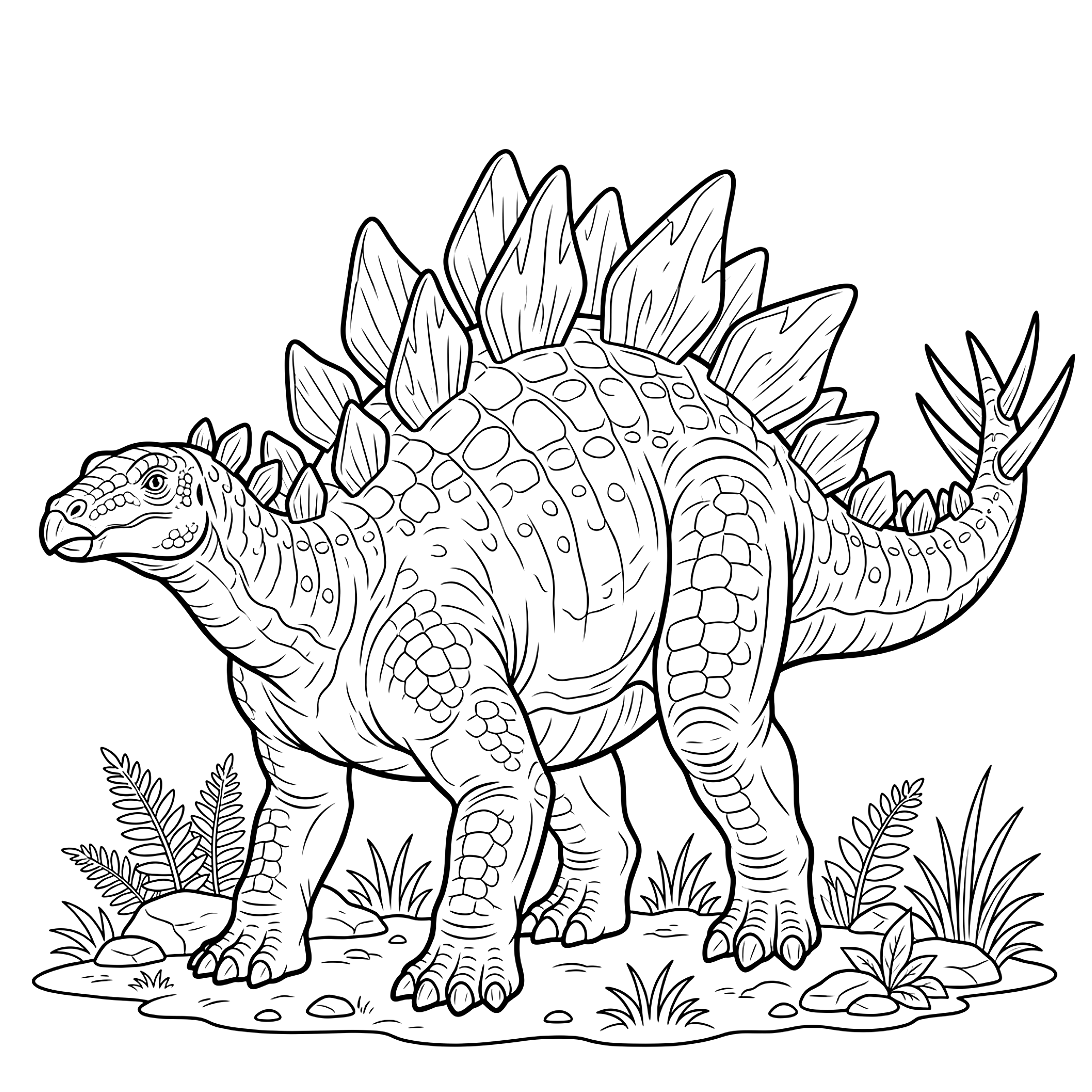
In this sheet the stegosaurus design sits at the center of the scene, surrounded by two rows of plates, four tail spikes, a small head and low plants. In the stegosaurus design, every element has a firm, even outline, so two rows of plates stands out clearly from the background. The inner spaces of four tail spikes in the stegosaurus design are wide enough for thick markers, while the details of a small head are perfect for fine-tip pencils. The composition of the stegosaurus design lets the drawing breathe: around low plants there are free areas for shadows, textures or a background of your own invention. That is why the stegosaurus design works for a calm afternoon of coloring as well as for more careful shading work.
Recommended age for stegosaurus
This stegosaurus sheet is designed for ages 8 to 10, although teens and adults looking for a creative break enjoy it too. Beginners can fill two rows of plates in the stegosaurus design with a single color, while more advanced colorists can blend tones in four tail spikes and a small head. The difficulty is medium, so the stegosaurus design can be finished in a short session or split across several afternoons. Coloring low plants in the stegosaurus design helps train steady hands, patience and color choice. If you color together as a family, each person can take care of a different part of the stegosaurus design.
How to print stegosaurus
To print the stegosaurus design, open the PDF and choose A4 or Letter depending on your paper. Select 100 percent scale or actual size so two rows of plates is not cut off at the edges. For the stegosaurus design, standard 80 gram paper is enough for colored pencils and crayons; for markers or watercolors on four tail spikes, a 150 to 200 gram paper works better. If you like the stegosaurus sheet, print several copies and test different palettes on a small head and low plants. The stegosaurus files are free and you can use them at home or in the classroom.
Color ideas for stegosaurus
A palette that works very well for the stegosaurus design is forest green, clay orange and soft purple. Start with two rows of plates of the stegosaurus design in forest green, and leave four tail spikes for clay orange once the first color is dry. For a small head in the stegosaurus design, try a soft gradient: press lightly at the start and add pressure toward the edge. If you want a livelier finish on low plants of the stegosaurus design, combine soft purple with a thin layer of a darker tone. Remember there are no wrong colors; the stegosaurus design also looks lovely with an invented palette, and you can decorate the background with dots, lines or stars.
A fun fact about stegosaurus
Stegosaurus weighed several tons, yet its brain was tiny compared with its body. That curiosity makes the stegosaurus design a good excuse to chat while coloring. You can ask what each person remembers about two rows of plates or invent a short story about four tail spikes. Writing down the names of the colors you used on the stegosaurus sheet is another way to turn the activity into a small vocabulary and observation exercise.