Architectural mystery and atmospheric details
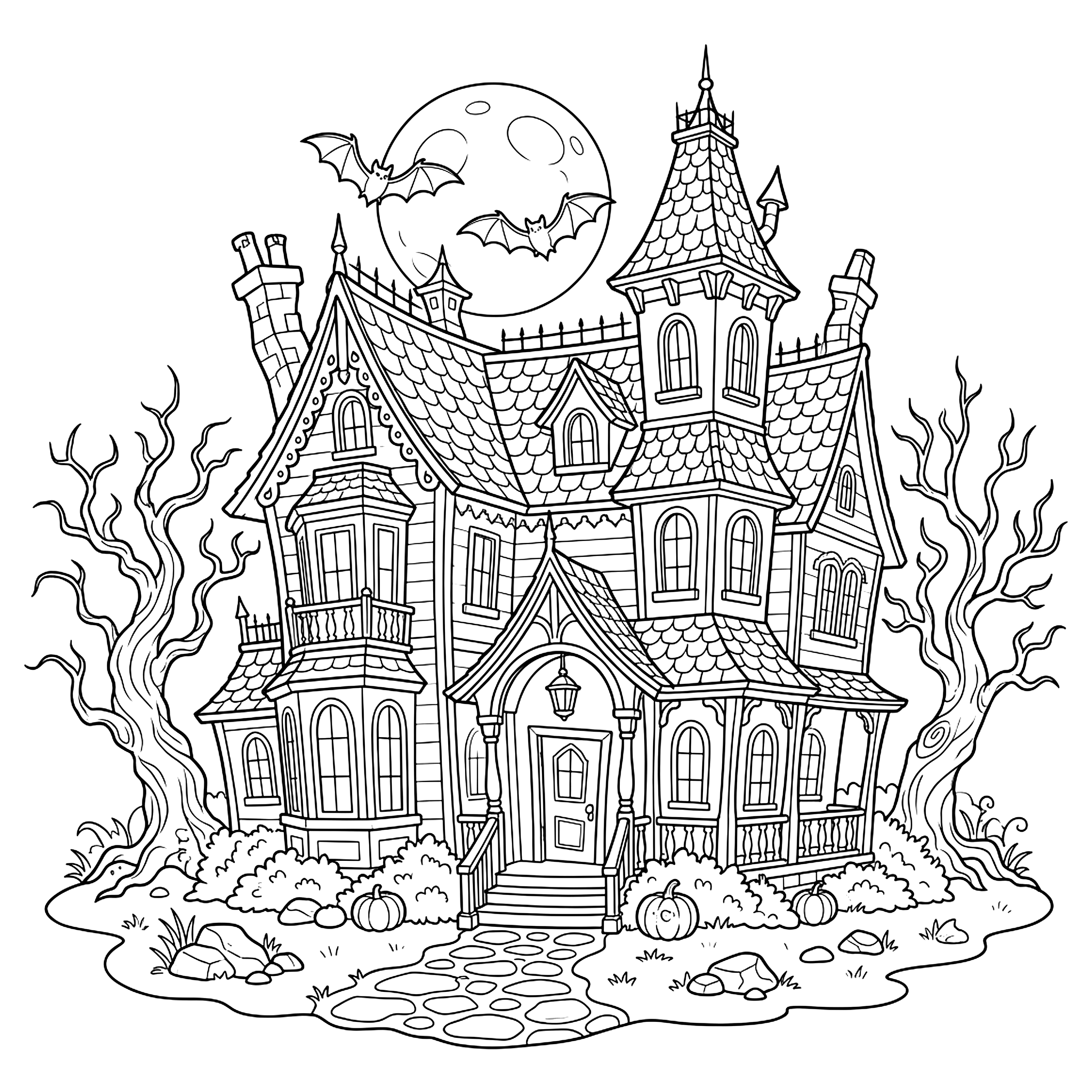
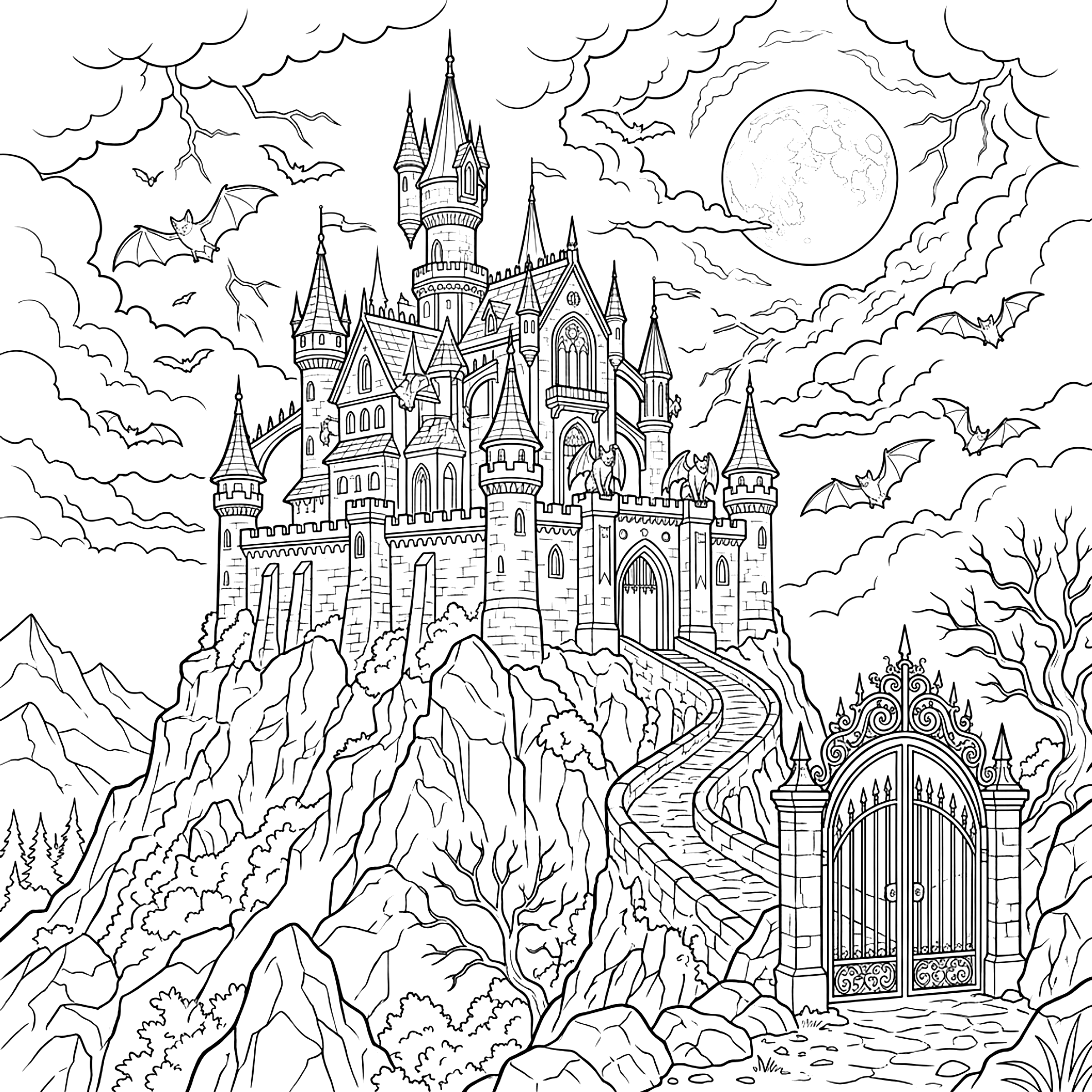
The illustration is filled with delightful domestic gothic details that inspire budding storytellers. Highlights include a crooked attic tower with a lit arched window, weathered clapboard sidings on the veranda, twisted wrought-iron gates standing open, and aged stone steps leading up toward an ornate front doorway. Every crooked window sill and weathered wooden plank of the porch exhibits calculated irregularities evoking centuries of harsh storms on mysterious hills.
An engaging art project for ages 8 to 14
Older kids, tweens, and teenagers find this page deeply absorbing because of its architectural perspective, varied building textures, and dramatic lighting opportunities. It provides hours of mindful concentration, allowing colorists to practice careful fine-line work across shingles and window panes.
Recommended paper and print configuration
Download the print-ready PDF and select high-resolution print quality in your printer dialogue. If you plan to use alcohol markers or dark watercolor brush pens on the night sky, we recommend printing onto heavyweight ninety-pound cardstock to eliminate ink bleed and sheet warping.
Creating nighttime theatrical contrast
Leave the grand harvest moon as pure white paper with a very faint yellow glow encircling its edge. Paint the mansion exterior in misty lavender-gray or dusty indigo, and illuminate two or three attic windows with radiant lemon yellow to suggest curious secret laboratory experiments within. Lightly apply watercolor pencils at the rocky hill base to render an eerie swamp fog drifting gently past the ancient stone foundation.
Why Victorian mansions became iconic haunted homes
During early cinema in the nineteen thirties, many real-life nineteenth-century Victorian mansions in California had fallen into decline and disrepair, making them inexpensive, visually striking filming locations for classic Hollywood ghost stories and detective mysteries. Nineteenth-century Victorian rooftop cupolas served as panoramic watch posts allowing residents to inspect surrounding hills during severe weather. Nineteenth-century Victorian rooftop cupolas served as panoramic watch posts allowing residents to inspect surrounding hills during severe weather.