Visual motifs and traditional sugar skull elements
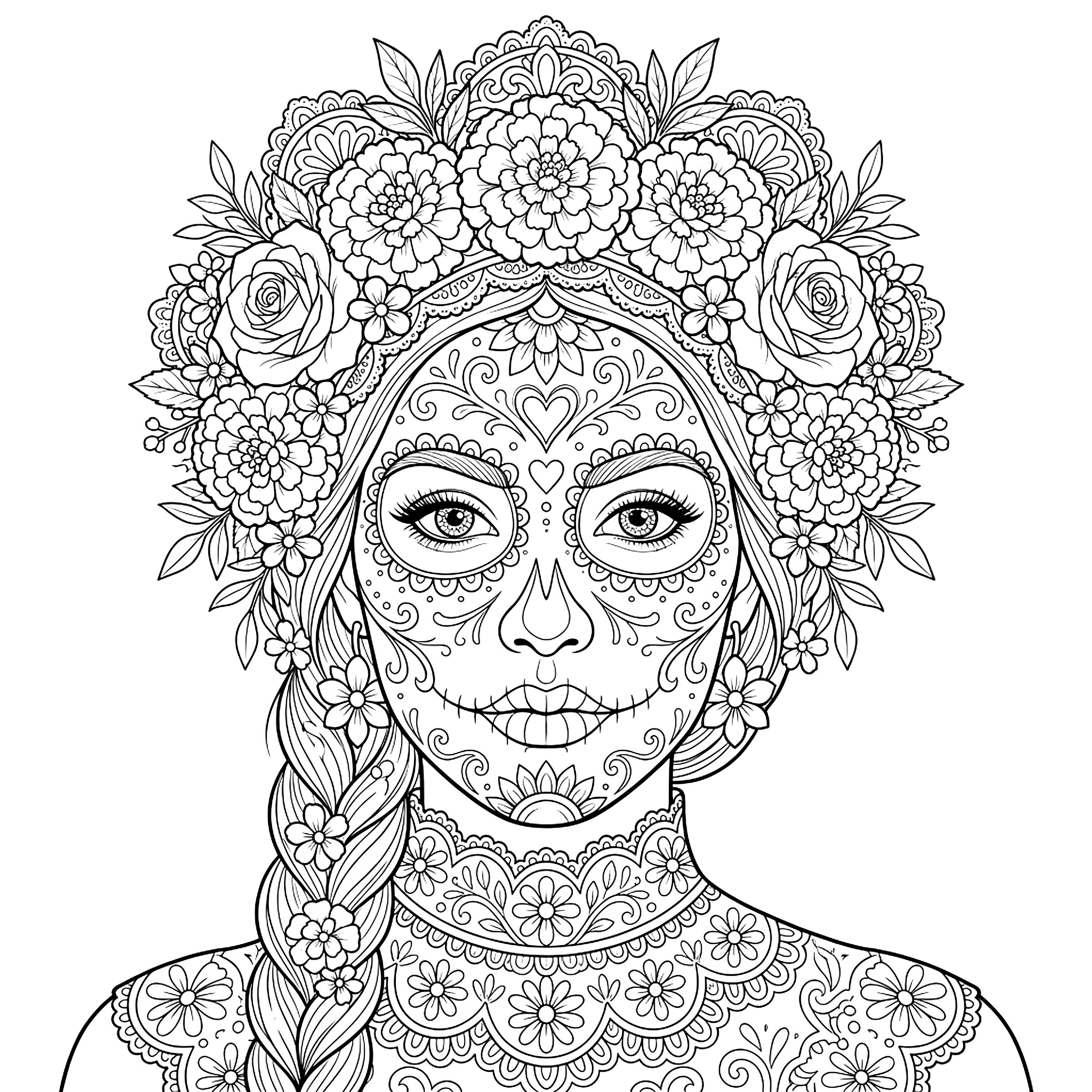
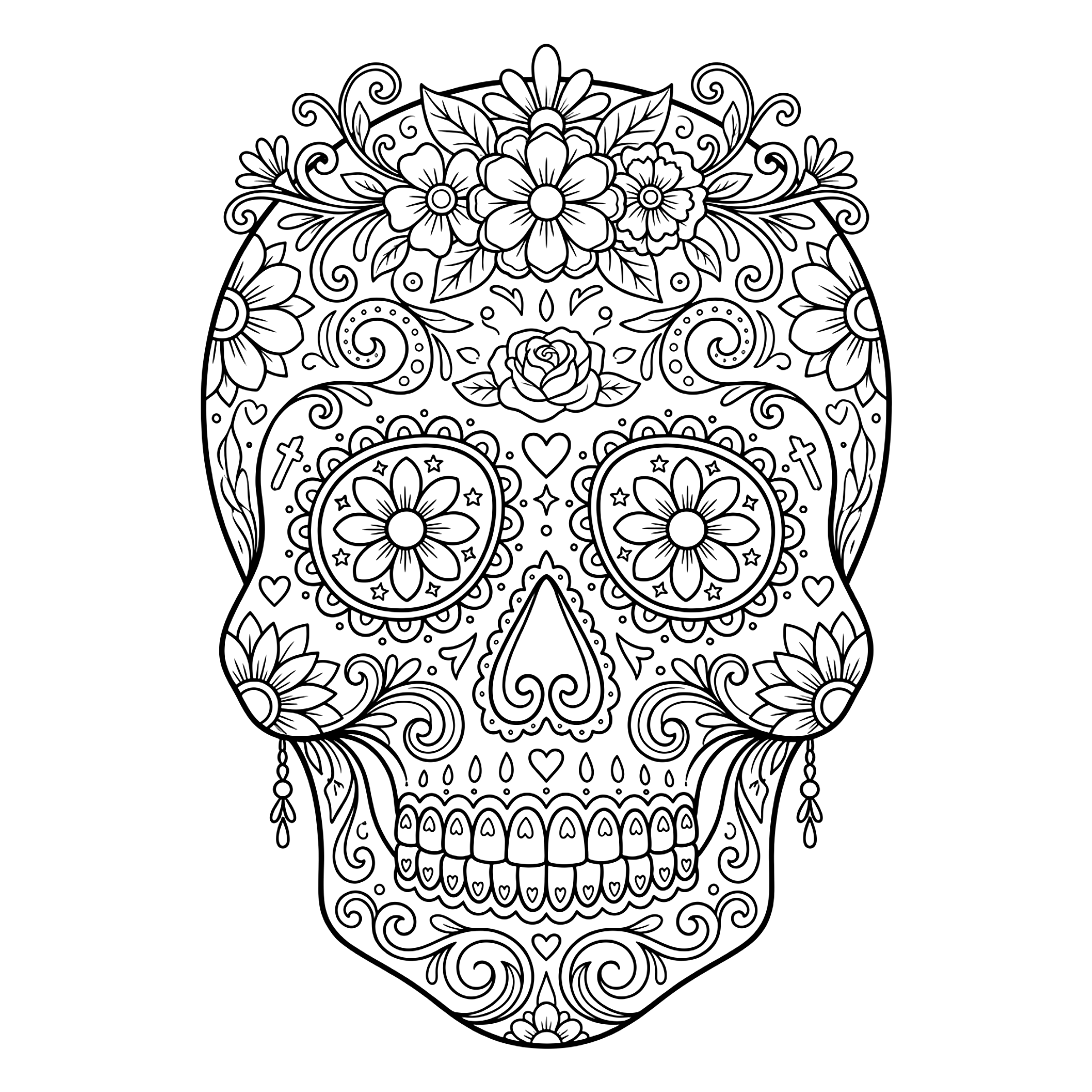
This printable line illustration highlights delicate swirls across the cheeks and chin, petal-ringed eye sockets, and a cascading headpiece of fragrant marigolds and wild roses. The Victorian lace collar frames the skull gracefully, giving artists ample opportunity to blend graphite gradients, vivid gel pens, or saturated colored pencils against pure white background space. A close inspection of the skeletal contours reveals miniature cross-hatching and floral tendrils inspired by traditional Tehuantepec embroidery, creating a direct visual tribute to indigenous textile artistry across southern Mexico.
Recommended age group and complexity rating
Owing to its intricate facial patterns and multi-layered flower petals, this piece is particularly well-suited for middle school students, teens, and adults seeking a mindful creative pause. Anyone fascinated by Mexican folk heritage and fine linework will find hours of relaxing engagement within these balanced contours.
Best printing practices for sharp linework
Downloading the vector-rendered PDF guarantees razor-sharp thirty-hundred dpi contours on both Letter and standard A4 sheets. Using heavy cardstock of at least one hundred and sixty grams ensures markers and wet media will not bleed through or warp your finished display poster.
Creative palette ideas for Day of the Dead tones
Layer bright cadmium yellow, rich marigold orange, and amber along the floral crown to mimic glowing autumn sunlight. Contrast those warm hues with electric turquoise, deep magenta, and royal violet inside the eye rings, while leaving bone highlights crisp and lightly contoured with silvery slate pencil shading. To establish graceful depth around the collarbone, apply soft circular shading with an HB graphite pencil, keeping the lace highlights immaculate so the neckpiece resembles authentic antique mourning lace.
Cultural origins of the Mexican skeletal grand dame
Initially created under the moniker Calavera Garbancera as a biting satire targeting social climbers denying indigenous heritage, this skeletal figure gradually evolved into Mexico’s most celebrated ambassador of remembrance. Today her likeness reminds global audiences that life and mortality coexist within a shared continuum of color and song.