What makes this illustration special
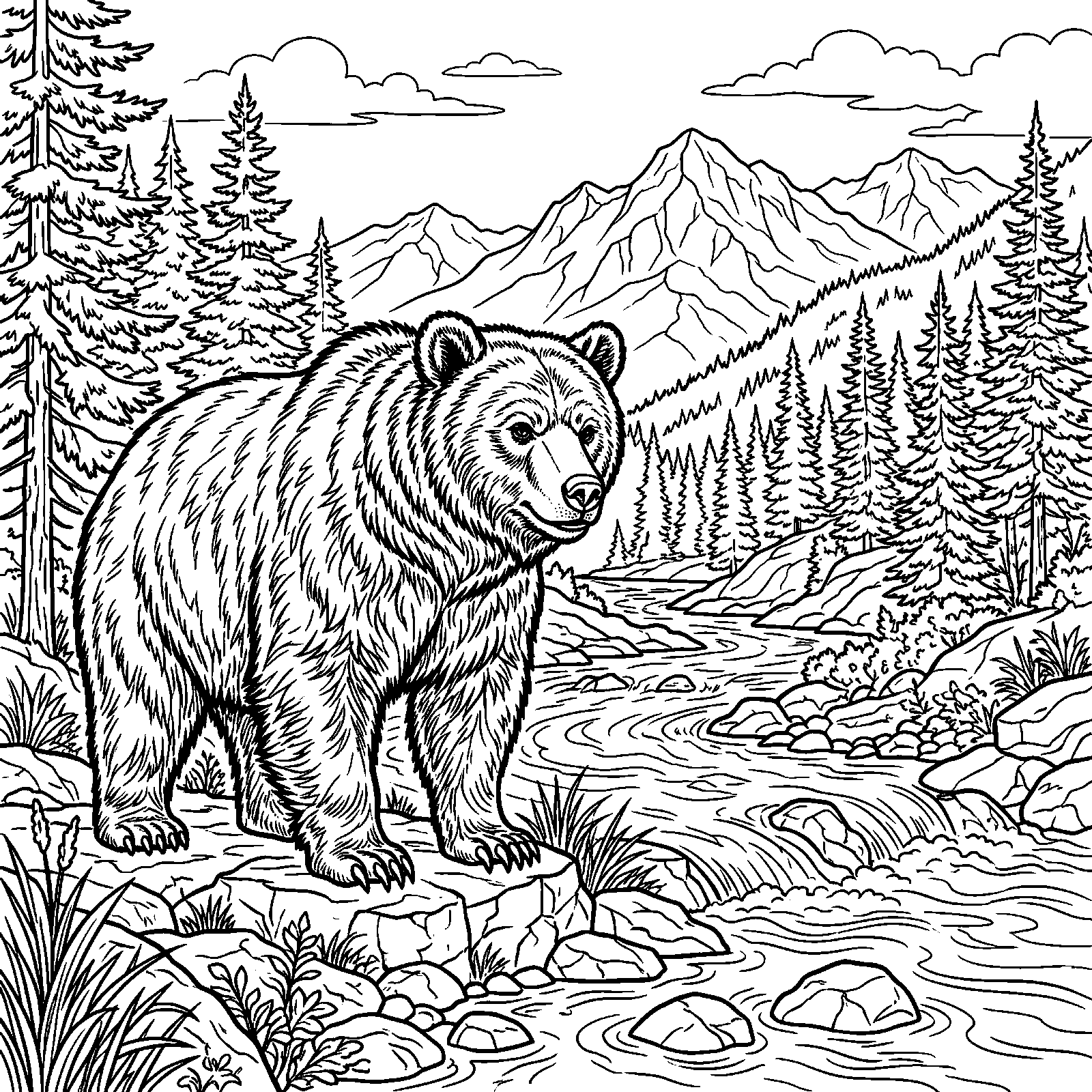
The grizzly stands in an alert profile pose with wide paws anchored on slick river pebbles, its head turned slightly toward the cascading current. The coat shows thick textured clumps along the shoulder hump and shaggy guard hairs around the flanks. Evergreens with detailed needles and churning white-capped rapids fill out the majestic landscape. Arched branches frame the top margin, drawing the viewer’s eye right toward the bear’s concentrated gaze.
Great for developing drawing patience
Perfect for creators ages ten to fourteen who are eager to push beyond cartoon animal stereotypes. The directional line work naturally guides pencil strokes along the animal’s contours, helping teens build confidence when blending multiple earthy tones into a convincing wildlife portrait. It also provides an engaging challenge for contrasting jagged rocks with moving water currents.
Print setup recommendations
Grab the Letter or A4 PDF edition tailored for your printer and print without borders or auto-shrink selected. A sturdy 180 gsm stock is highly recommended if you wish to apply deep pigment layers or use wet media like gouache or water-soluble crayons on the river scenery. A warm off-white or natural cream paper stock further enhances the rustic mountain mood.
Coloring concepts for alpine landscapes
Render the river rapids with cool aquamarine, turquoise, and steel blue, preserving untouched paper whites for frothy spray. On the bear, layer milk chocolate tones over a caramel undertone, then deepen the belly shadow and paw crevices with rich espresso or charcoal black. Add faint golden highlights along the bear’s back to simulate morning sunlight cutting through pine branches.
Grizzly adaptations in northern forests
Grizzly bears sport a distinctive shoulder hump consisting of pure muscle used for digging up roots, overturning boulders, and bursting into swift pursuit. Their double-layered coat features a dense woolly underlayer that traps body warmth during freezing river dips in search of migrating salmon. Furthermore, their keen sense of smell is seven times stronger than that of a bloodhound, allowing them to locate ripe berries and fresh streams miles away.