What the picture shows
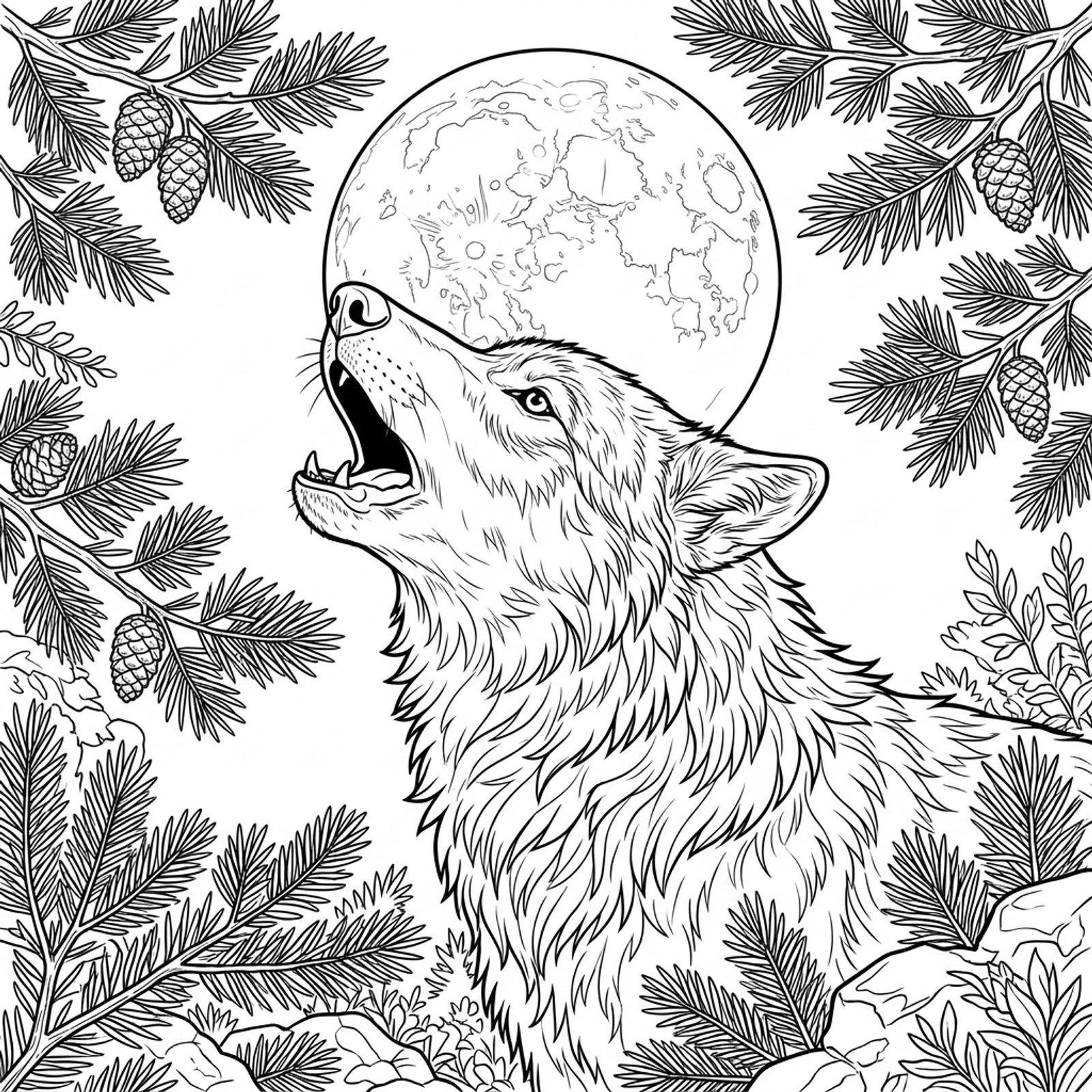
The wolf appears in profile from the head down to the chest, mouth open in a full howl. The fur is drawn in long overlapping tufts, shorter around the muzzle and denser at the neck. A big moon glows overhead, and branches loaded with needles and pinecones sweep in from the sides. Some areas are wide, like the moon, while others, like the chest tufts, are tiny, so it mixes rest with challenge.
Best ages for this page
It is designed for kids from ten to fourteen who already handle colored pencils comfortably. The fur calls for patience, not extreme skill, since short repeated strokes get the job done. Older kids in that range can push the challenge with gradients and deep shadows, while younger ones can leave parts of the fur in one tone without losing the page's impact.
How to print the wolf
Pick the PDF for your paper, Letter or A4, and leave fit-to-page switched off so the margins stay intact. Medium-weight paper lets you stack pencil layers without wrinkling. If you plan an intense night sky, print a test copy first and practice your blue and purple blends there.
Ideas to bring the wolf to life
Try a deep navy night with a silver-gray wolf, leaving the moon white so it seems to light the scene. For realism, follow the direction of the fur with your pencil and strengthen the shadows under the jaw. If you want fantasy instead, color the whole wolf one bright shade such as turquoise and give the moon a warm yellow glow.
Coloring the scene like a painting
If you want the page to look like a painting, start with the sky and the moon, then work on the wolf and the branches. A gradient from dark blue at the top to medium blue near the forest adds depth, and the moon stands out more when you ring it with a very soft pale blue halo. Use muted browns and greens for the pinecones. At the end, go over the line of the jaws and the eyes with a dark pencil, since those are the first things a viewer looks at.