What the page contains
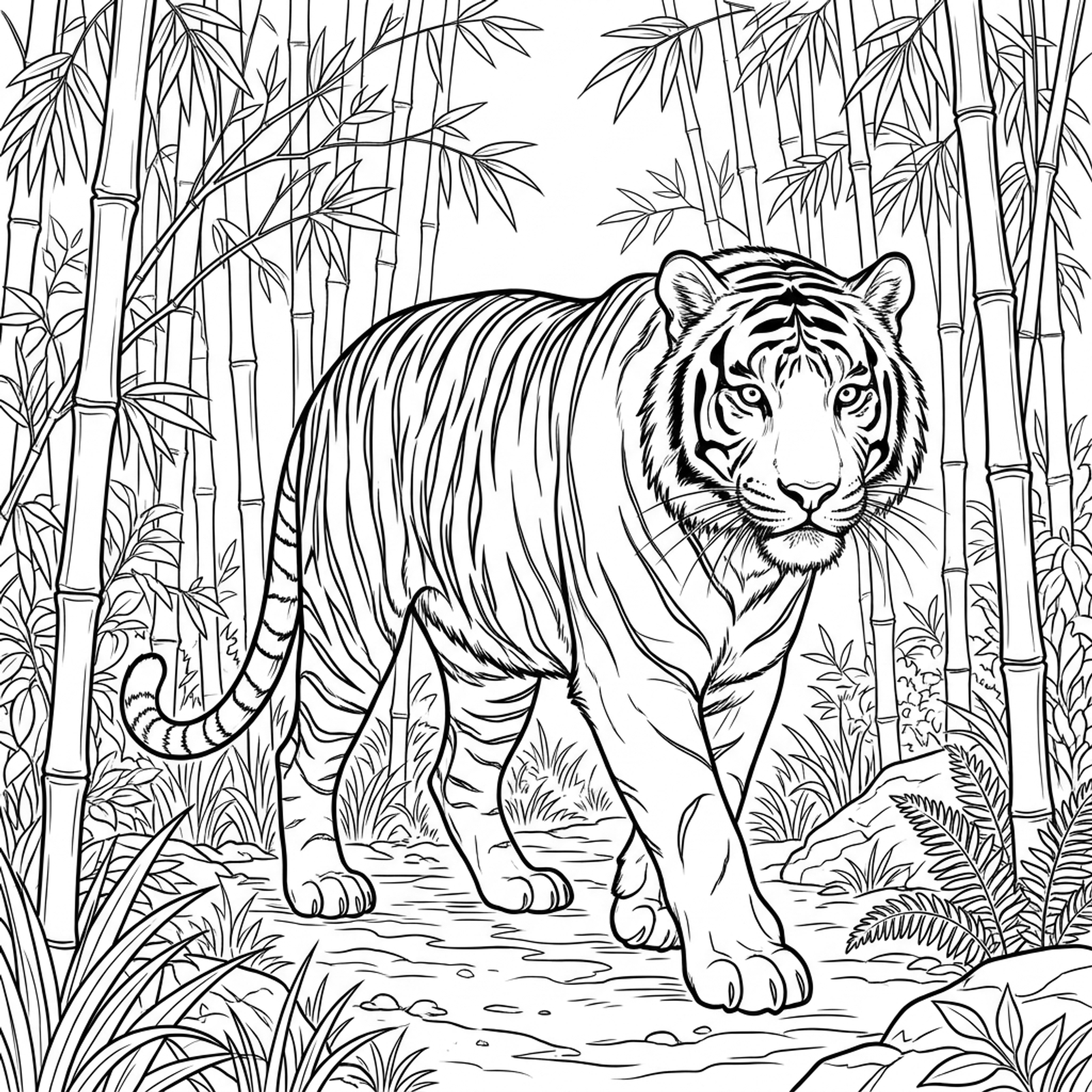
The tiger walks sideways, but its head swings toward the viewer with narrowed eyes and whiskers drawn one by one. Stripes wrap around the back and legs in bands that narrow toward the ends, while bamboo leaves cross in front of and behind the body. That creates several layers and makes you decide which part sits in light and which in shadow.
A good fit for these ages
Intended for kids from ten to fourteen. The stripes are already marked, which makes them easy to follow, so the work is mostly color and shading. For someone just moving into detailed animals this is a friendly first tiger, and experienced colorists can spend time on the contrast between stripes, pale fur and shadow.
Print recommendations
Download the PDF for your paper and confirm the scale is one hundred percent before printing. The drawing has dark lines close together, so normal or high quality keeps them from clogging. Medium-weight paper handles several layers of orange without wrinkling or turning shiny.
A trick for a tiger with volume
Color the whole body with a light orange first, then add a stronger orange along the back and under the belly. Leave the chest, the inner legs and the ear edges cream or white. If the bamboo is green, use a darker green behind the animal so the tiger pops forward.
Coloring bamboo without upstaging the tiger
The background is so attractive that it could steal the animal's thunder. To prevent that, use cooler, quieter greens on the bamboo and save the warm colors for the tiger. Color each stalk in three tones, a light one in the middle and two darker ones at the sides, so it reads as a cylinder. Leaves far away can be a very soft bluish green, and closer ones a stronger green with small shadows. Before you start, test your greens on scrap paper, because bamboo shifts a lot between a light yellow-green and a deep forest tone, and you will want the stalks to feel a step quieter than the animal itself.