Feline anatomy and authentic rosette coat patterns
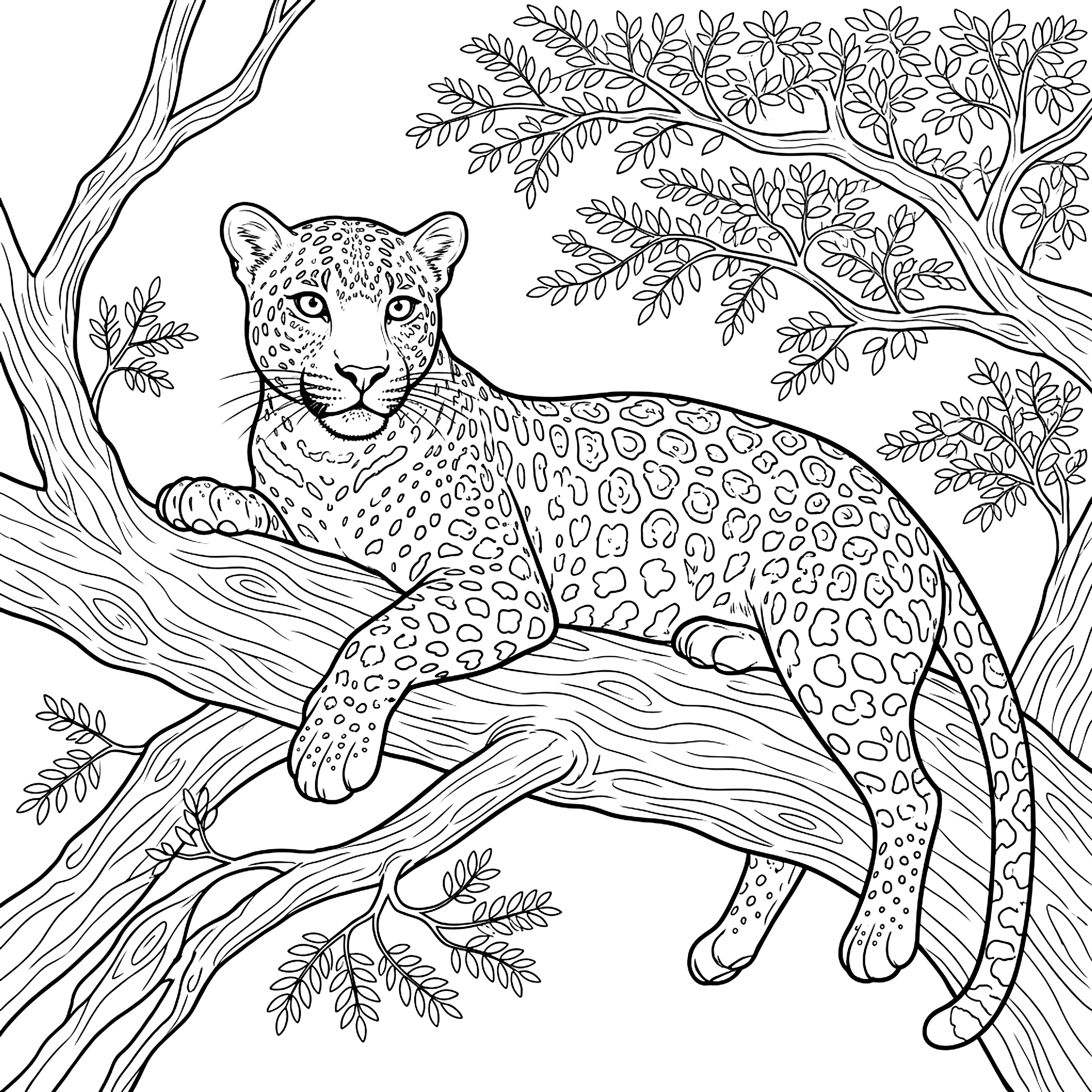
The artwork captures the muscular elegance of the resting big cat poised in natural balance. Its coat is embellished with open horseshoe rosettes boasting warm caramel centers and dark boundaries that transition into crisp solid spots along the muzzle, paws, and tail tip, providing an inspiring canvas for layered colored pencil shading. The long, thick tail acts as a crucial counterweight when balancing across narrow tree branches high above ground, giving the solitary cat extraordinary agility in the open wild canopy. Keen golden eyes scan the horizon for moving game animals in the tall grasses.
Recommended age group and wildlife art benefits
Ideal for middle school students, teenagers, and wildlife enthusiasts aged eight and upward. Coloring the repetitive natural pattern of leopard spots builds fine motor patience, hand-eye coordination, and an intuitive understanding of animal anatomy and lighting angles.
Printer guidance for crisp coat pattern reproduction
Downloading the vector PDF ensures unclipped margins on standard US Letter or A4 sheets. Using heavy white paper around one hundred and twenty grams provides smooth tooth for blending colored pencils without creating indentation creases on lower surfaces.
Coloring strategies for realistic tawny fur texture
Layer light sand yellow across the flanks while preserving creamy white space along the chest and underbelly. Fill rosette interiors with warm caramel ocher before darkening outer rims with espresso brown, finishing the almond eyes with radiant amber or jade green. To achieve velvety softness around the muzzle, blend ivory white with a blending stump over the upper lip and dot fine black speckles where long white sensory whiskers emerge gracefully.
Incredible strength and treetop arboreal life
Unlike lions and cheetahs, leopards possess extraordinary upper-body strength enabling them to hoist heavy prey high into tree canopies. Storing food safe from savanna scavengers allows them to nap calmly among shaded leafy branches away from the midday heat.