The Day of the Dead altar, or ofrenda, stands as the spiritual heart of Mexican autumn remembrance rituals. Built in stepped tiers representing levels between earthly existence and spiritual dimensions, each altar welcomes departed souls with glowing candles, arching marigold garlands, fragrant bread, water, and family photographs. This comprehensive line illustration allows families and classrooms to explore the deep symbolism of this celebration through creative art.
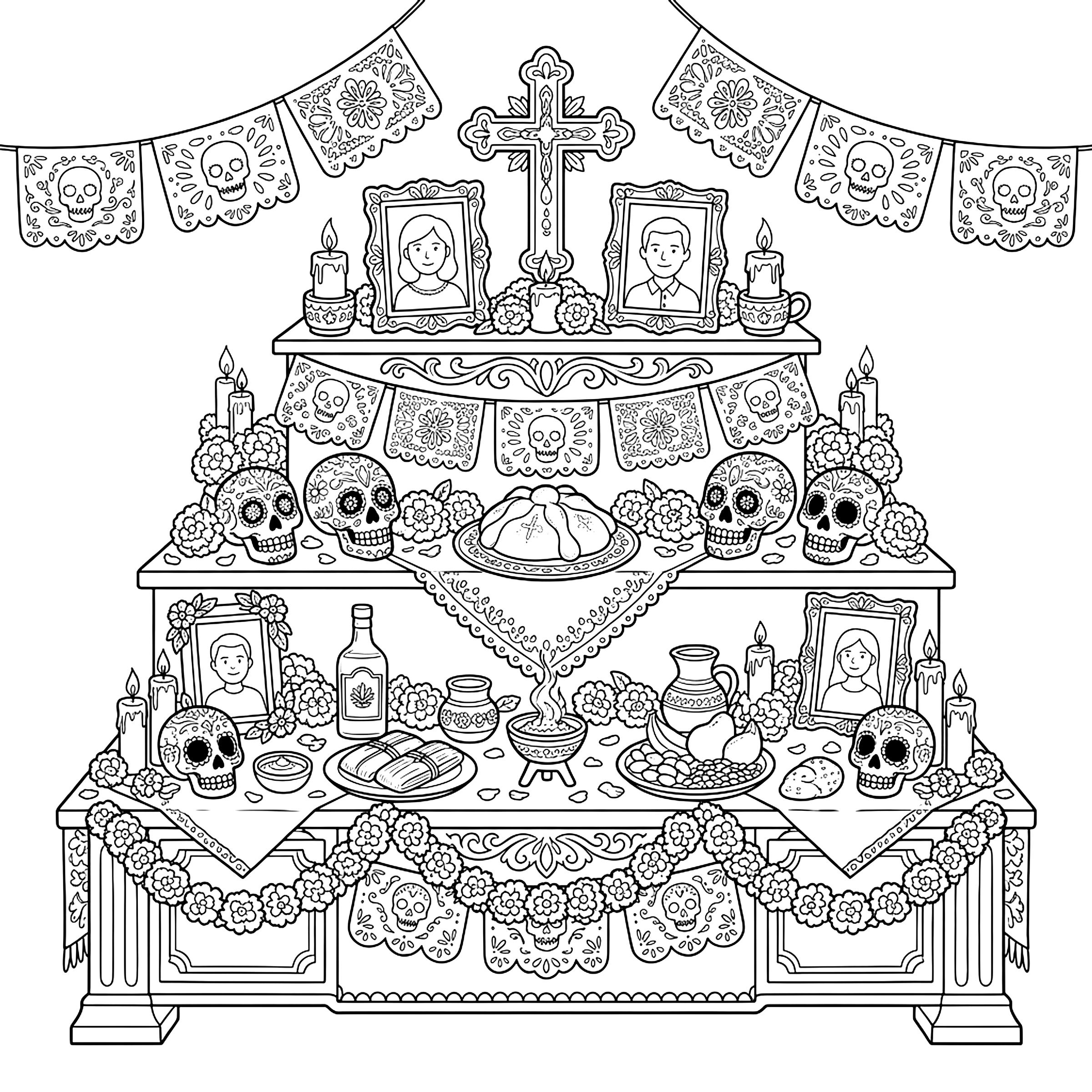
This artwork illustrates a three-tiered ofrenda filled with meaningful objects: framed family portraits at the pinnacle, loaves of sugared pan de muerto, clay jugs, and sugar skulls in the middle section, and earthenware water jars, salt dishes, and glowing candleholders lining the base path. The balanced symmetry of candelabras, pottery vessels, and harvest fruit baskets reflects ancient Mesoamerican agricultural worldviews that harmonized celestial energies with seasonal earth harvests. Every decorative clay dish holds special spiritual meaning for visiting ancestors.
Educational value for classrooms and multicultural learning
Rich with cultural storytelling, this design is ideal for grade schoolers, teenagers, and educators looking to discuss heritage traditions. The wide array of shapes fosters sustained focus as students discover the story behind each miniature item depicted on the ceremonial altar.
Recommended printer setup for detailed sheet art
Exported in high-definition vector PDF format, lines remain sharp across standard A4 or US Letter sizes. For best results with markers or water-based media, print onto heavy drawing paper of at least one hundred and fifty grams to prevent surface buckling.
Warm ambient palette tips for candlelit glow
Use warm cadmium oranges and sunflower yellows for the floral garlands and flickering candle flames. Drape the altar steps in bright magenta or royal purple banners to recreate traditional festive drapery, adding deep browns and golden ambers across the baked breads. A delightful stylistic touch involves highlighting the portrait picture frames with bronze or gold gel pen to simulate gilded colonial woodwork commonly found in Mexican rural churches.
The four cosmic elements woven into the altar
An authentic Mexican ofrenda thoughtfully incorporates Earth through food and harvest fruits, Wind via moving perforated paper banners, Water to quench spiritual thirst after travel, and Fire through flickering votive candles guiding the spirits home safely.
Frequently asked questions
What do the three levels of a traditional altar represent?
They commonly symbolize heaven, earth, and the underworld, reflecting both pre-Hispanic beliefs and later colonial syncretism.
How can you make the candle flames look realistic?
Color the core in brilliant white, blending outward into light canary yellow and soft orange to produce a natural ambient halo.
Why are photographs placed on the top tier of the ofrenda?
Portraits honor the specific ancestors who are being invited back to enjoy the offerings prepared lovingly by their living kin.
What role does burning copal incense play at the ofrenda?
Its aromatic resin smoke purifies domestic spaces and carries prayers upward, creating a sacred path of peace for visiting souls.
Why are sugar skulls placed beside the photos on the altar?
They serve as playful reminders of human mortality while adding decorative sweetness to welcome returning family members.