Symbolic anatomy of the ceremonial sugar bread
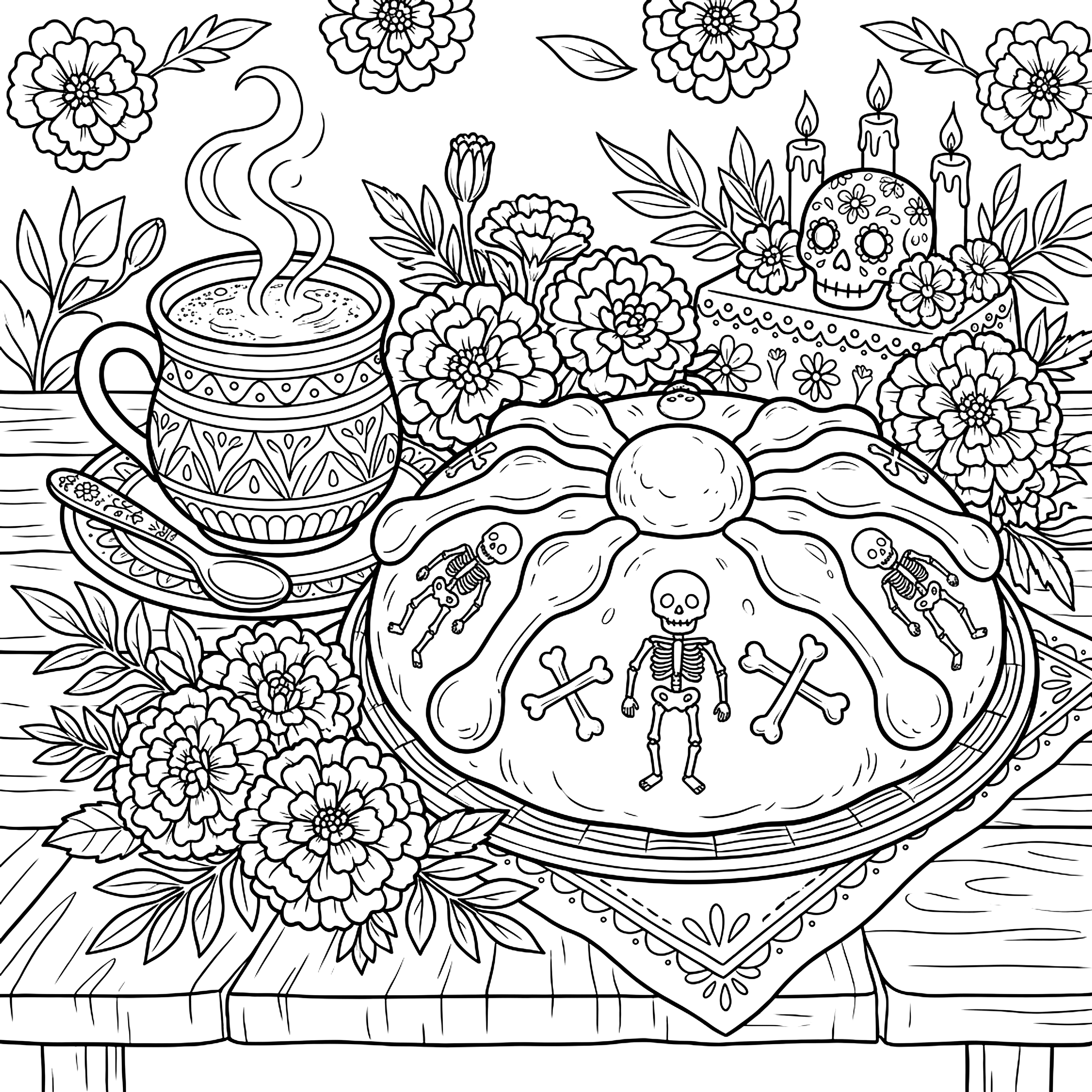
The drawing highlights the rounded golden dome of the bread, crowned at its apex by a small dough sphere representing a human skull. Four tear-drop bone strips drape symmetrically along the sides toward the four cardinal directions, while fine sugar crystals dusted across the crust provide rich tactile opportunities for colored pencils. The golden sheen of the crust and radial arrangement of dough bones reflect a centuries-old bakery lineage perfected within colonial convent kitchens specializing in fragrant orange-water doughs. Sharing this seasonal treat brings relatives together around the kitchen table in celebration.
Accessible culinary artwork for younger children
With gentle curves and generous open spaces, this coloring page offers a relaxing creative experience for preschoolers and early elementary students. It serves as a gentle introduction to cultural culinary arts while allowing little hands to practice even shading across broad rounded surfaces.
Printer guidance for clean lines and margins
Download the vector-rendered PDF to ensure clean borders on US Letter or A4 sheets. Using smooth cardstock around one hundred and twenty grams helps colored pencils lay down smooth golden glazes without leaving heavy indentations on the work table.
Shading suggestions for oven-baked golden tones
Layer buttercup yellow across the bread surface, deepening the lower ridges with toasted caramel and rich nutmeg brown. Leave tiny uncolored specks to simulate sparkling granulated sugar crystals, and shade the hot chocolate mug in warm terracotta with ivory milk foam on top. To emphasize the cozy appeal of the hot chocolate mug, swirl creamy ivory pencil marks across the surface to mimic frothy bubbles created with a traditional wooden molinillo whisk.
Centuries of baking heritage on family altars
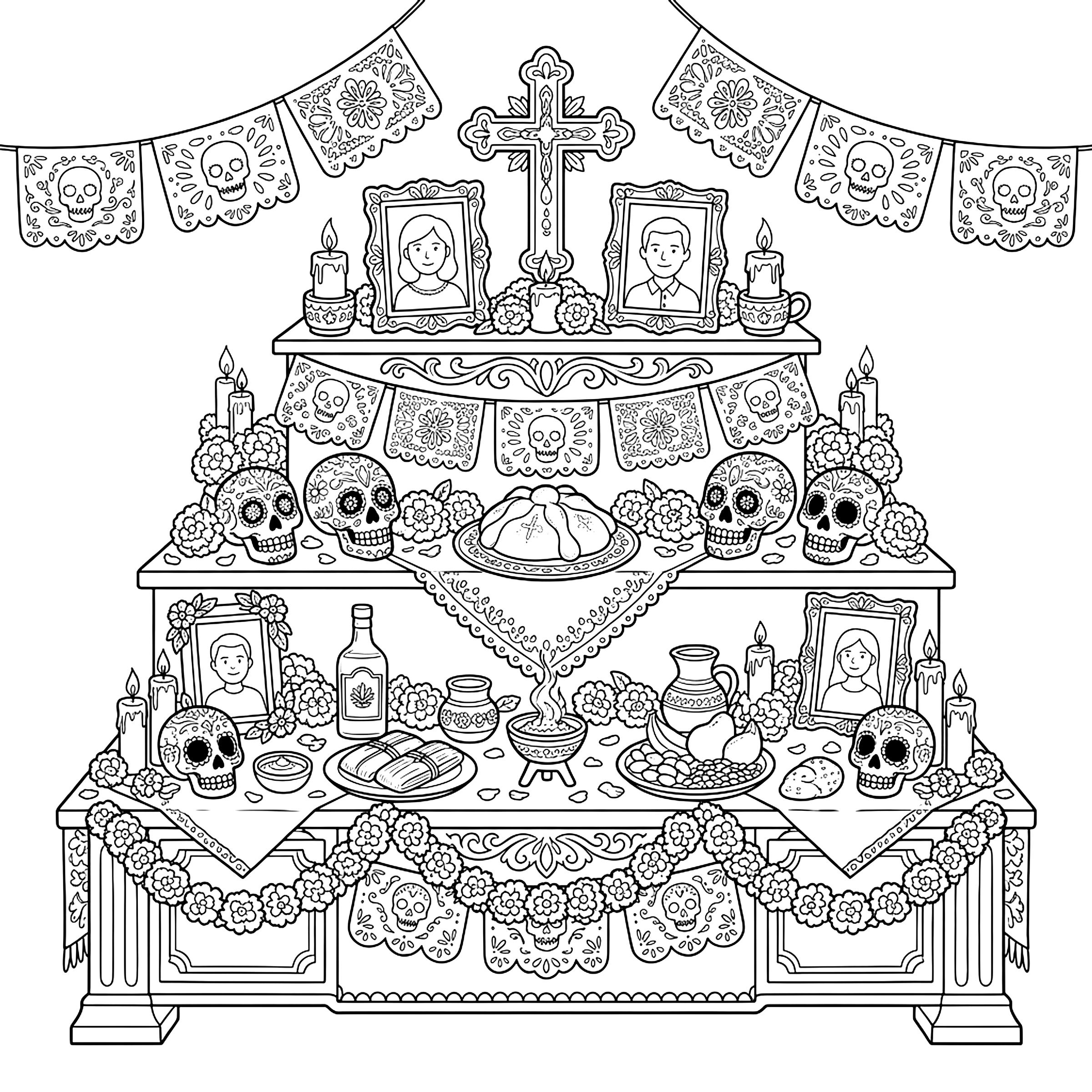
The pan de muerto bridges pre-Columbian amaranth grain offerings with Spanish wheat baking methods brought to the Americas. Today, resting upon ofrenda tables throughout Latin America, the sweet bread symbolizes spiritual nourishment provided by the living to sustain traveling ancestors.