Mechanical engineering of Pirate galleon ship
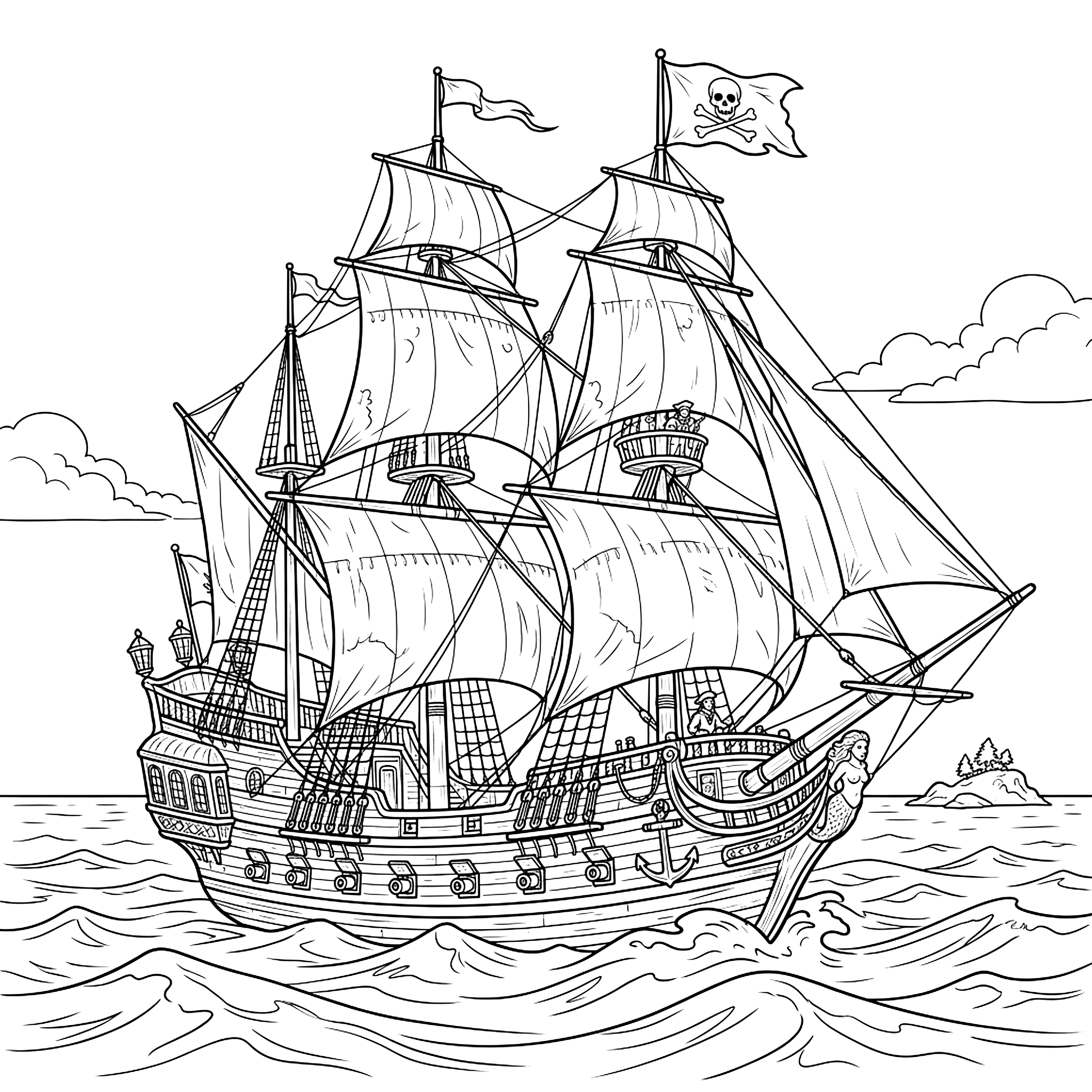
This legendary privateer galleon cuts through turbulent ocean swells with all towering canvas sails unfurled before the trade winds. The multideck wooden hull features reinforced oak strakes, rows of open gunports revealing bronze cannons, and an ornate baroque stern castle with lantern fixtures. Fluttering atop the towering mainmast is the notorious Jolly Roger skull and crossbones ensign, while a labyrinth of authentic rigging, ratlines, and pulley blocks provides an absorbing challenge for historical naval illustration enthusiasts. The decorative bowsprit figurehead, hand-carved from seasoned cedarwood into a gilded sea serpent, glared out across open swells to guide the privateers through treacherous shoals. Heavy iron strapping reinforced the rudder pintles against battering cross-currents in shallow straits.
Recommended age range for Pirate galleon ship
Ideal for colorists aged ten through fourteen captivated by maritime adventure and historical sailing craft. The intricate network of ratlines, rigging blocks, and wooden planks rewards patient hand control with an awe-inspiring finished display.
Printable PDF download for Pirate galleon ship
This printable vector pirate galleon PDF file is scaled perfectly for standard home printers on Letter and A4 pages. High-contrast line art ensures effortless coloring with colored pencils, fine liners, or light gouache washes.
Coloring tips for Pirate galleon ship
Begin coloring the weathered timber hull with warm hazelnut or antique oak, transitioning to deep espresso brown along waterlines where sea spray stains the planks. Render the billowing sails in antique ivory or aged parchment, shading curved billows with soft sepia to accentuate wind pressure. For the heavy artillery cannons and ship anchor, apply deep graphite grey kissed with burnished bronze highlights to capture genuine maritime cast metal patina. To simulate maritime weathering on the timber hull, whisper touches of marine olive green and algae grey along the lower waterline boards where tide marks leave crusty salt residues. Stippling warm ochre highlights across deck railings catches early dawn harbor sun.
History and technical heritage of Pirate galleon ship
During the seventeenth and eighteenth centuries, sailing galleons merged the expansive cargo holds of merchantmen with the heavy broadside artillery of warships to convey silver and spices across trade oceans. Their intricate maze of masthead rigging enabled skilled navigators to angle sails with precision, outrunning pursuit vessels or intercepting merchant fleets along trading straits.