Mechanical engineering of Deep sea exploration submarine
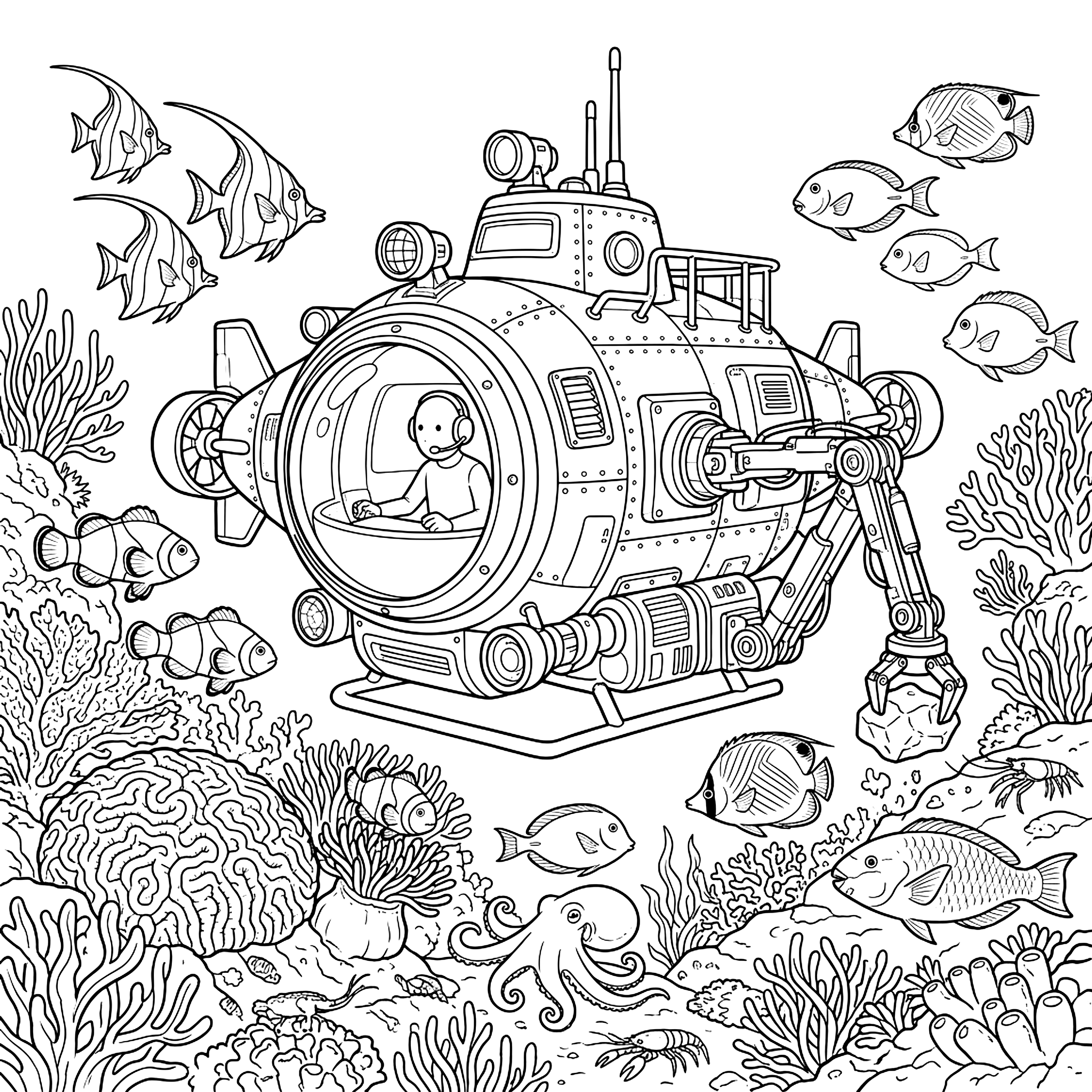
This high-tech deep-ocean research submersible explores mysterious abyssal trenches where natural sunlight never penetrates. The spherical titanium pressure hull features an ultra-thick panoramic observation dome, powerful auxiliary halogen search beacons, and an articulated hydraulic sampling manipulator. Gliding around the illuminated sub are fascinating benthic creatures including bioluminescent anglerfish, ethereal translucent jellyfish, and curious squids, composing a captivating tableau that unites oceanographic engineering and deep-sea ecology. An ultra-quiet electric vectored propulsion pod allows marine scientists to glide gently beside fragile deep-water sponge reefs without disturbing the delicate seafloor sediment. Auxiliary syntactic foam flotation packs provide stable buoyancy across varying ocean depth thermoclines.
Recommended age range for Deep sea exploration submarine
Created for youths aged ten to fourteen fascinated by marine biology and ocean engineering. It offers a captivating canvas to experiment with high-contrast chiaroscuro between the bright yellow sub and the shadowy oceanic abyss.
Printable PDF download for Deep sea exploration submarine
This deep ocean exploration submarine vector PDF is formatted for standard home printing on Letter and A4 sheets with crystal clarity. Bold vector outlines ensure a relaxing and immersive coloring session whether in classrooms or at home.
Coloring tips for Deep sea exploration submarine
An iconic expedition canary yellow hull contrasts brilliantly against shadowy oceanic waters. Shade the metallic spherical submersible with warm mustard and amber tones beneath its belly to establish dramatic three-dimensional roundness. For the surrounding aquatic environment, blend from radiant cerulean blue directly under the spotlight cones into midnight navy and deep abyssal black along page borders. Touch the deep-sea fauna with glowing hits of fluorescent pink, aqua cyan, and luminescent emerald green. To render pristine clarity on the thick observation dome, draft twin curved white specular reflection highlights across the upper rim to mimic reflections from interior instrumentation panels. Blending turquoise into rich midnight navy along the sea floor depth brings dramatic subterranean atmosphere.
History and technical heritage of Deep sea exploration submarine
Deep-ocean exploration submersibles represent a triumph of naval engineering, functioning reliably under crushing hydrostatic pressures exceeding four hundred atmospheres where structural failure would be instantaneous. Through deep submersible dives, marine scientists discovered hydrothermal volcanic vents and chemosynthetic ecosystems thriving without sunlight.