Subzero adaptations and flowing northern lights sky
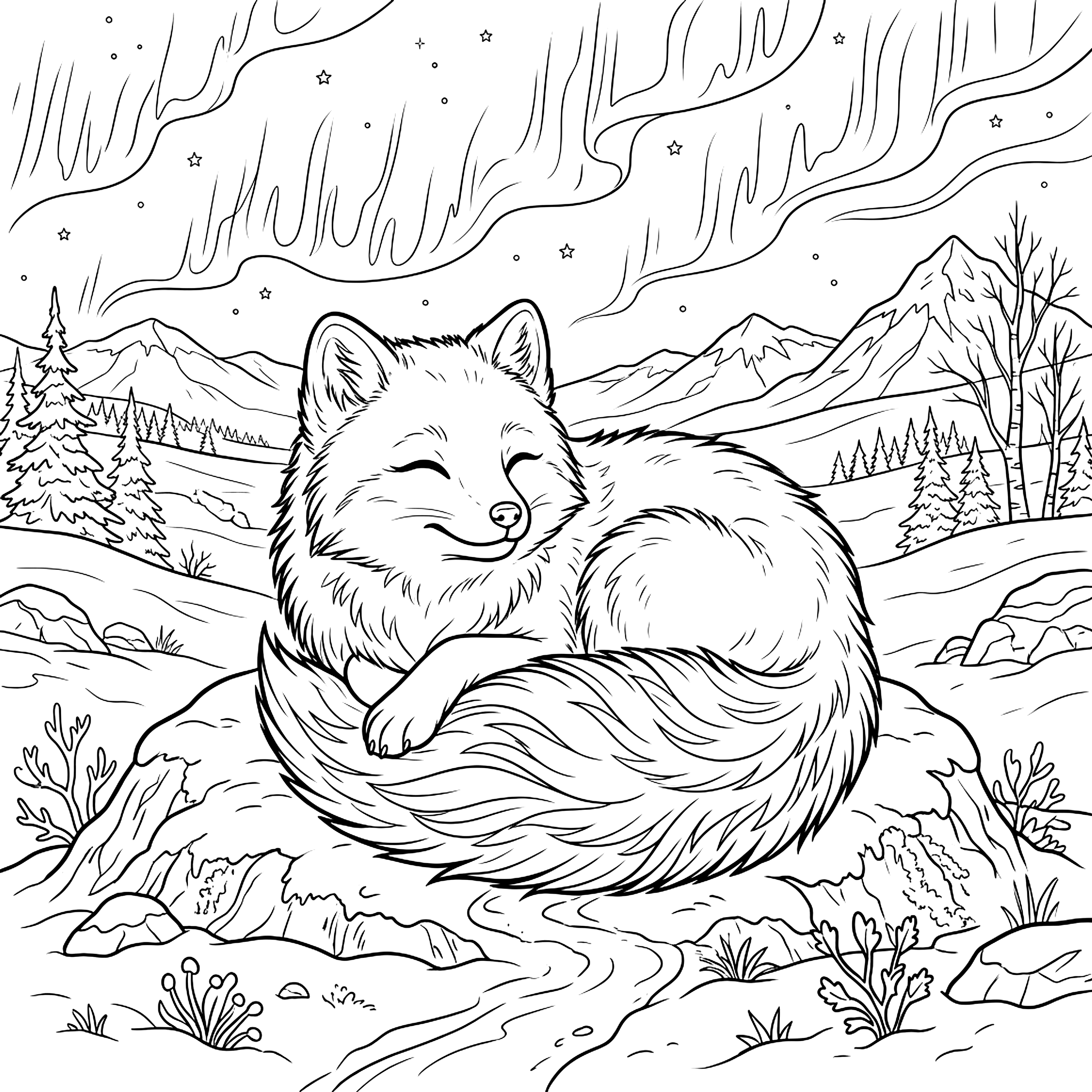
The illustration features the dense spherical silhouette of the winter fox, its heat-conserving short rounded ears, and a lavish tail acting as a built-in down blanket. In the background, rolling snowbanks sit beneath glowing curtains of the northern lights, inviting radiant sky coloring. The lavish curve of its bushy tail wrapped around tucked paws accentuates warm insulation amidst barren polar icefields. Slender snow ridges echo the graceful movement of the arctic winds under the twilight sky.
Delightful winter art project for elementary students
Ideal for children aged six through fourteen who adore arctic wildlife and astronomy. Coloring white animals teaches subtle pencil pressure techniques, showing young artists how delicate washes of ice blue and lavender define body contours without losing snow-white brightness.
Printing instructions for crisp winter linework
Download the vector-based PDF for razor-sharp contours on US Letter or A4 sheets. A sturdy paper weight around one hundred and twenty grams is ideal for blending colored pencils or applying light watercolor washes across the polar sky.
Palette ideas for radiant aurora borealis skies
Swirl bright electric green, cyan, and vivid violet across the nocturnal polar sky behind the snowy hills. Shade the white fox using whisper-soft baby blue and pale lilac along the fur crevices and lower paws, finishing its button nose with jet black and a bright white highlight. On the snowy drifts, brush whisper-soft pastel violet shadows to mirror the radiant ethereal colors shimmering in the celestial night sky.
The remarkable seasonal color-changing coat
The arctic fox undergoes a dramatic seasonal camouflage transformation. During harsh polar winters, it grows a thick snow-white winter pelt, while during brief arctic summers, it molts into a dusty gray-brown coat to blend into tundra rocks, lichens, and damp heathlands.