What is going on in the scene
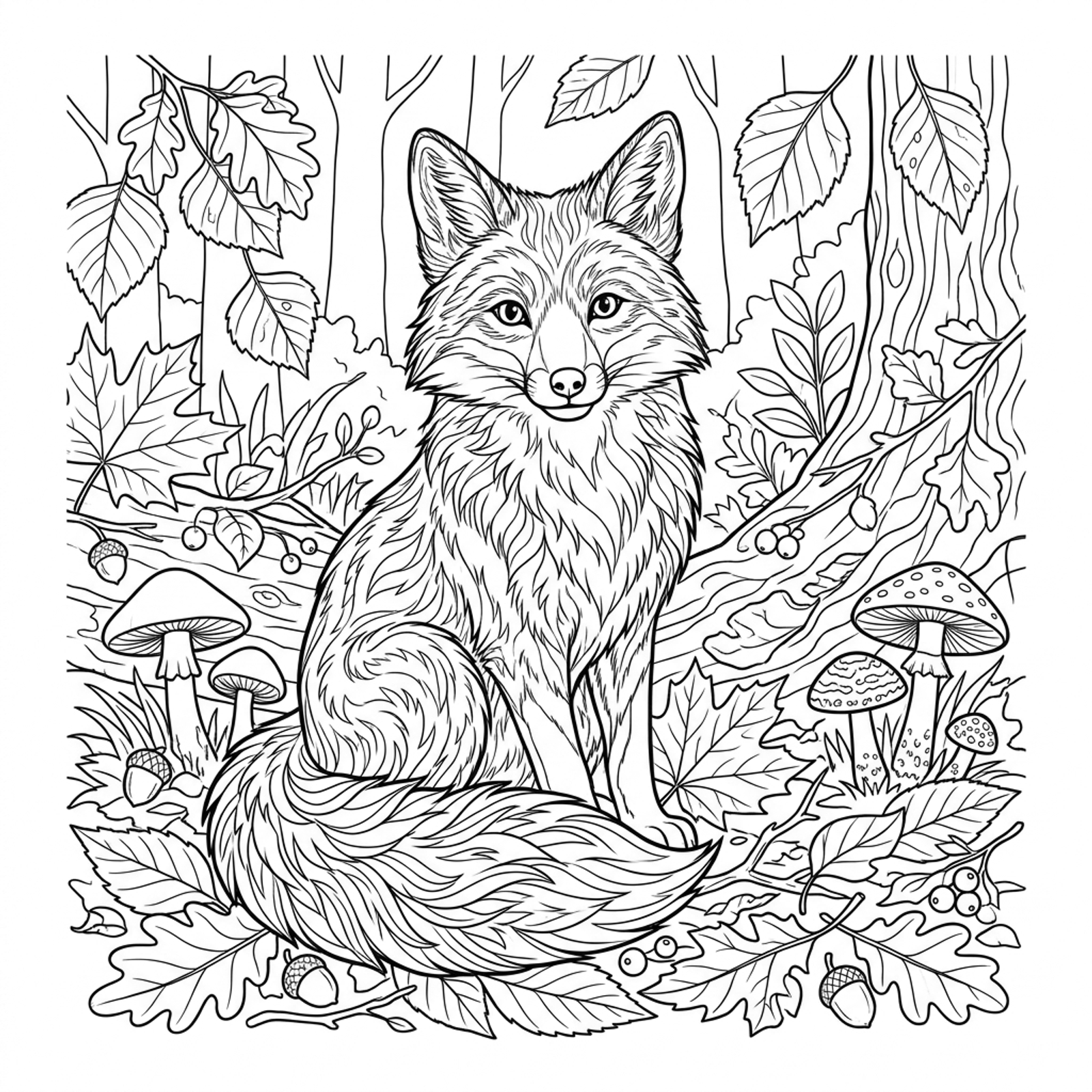
The fox sits at the center facing forward, with a slender muzzle, large pointed ears and a calm gaze. Its broad, fluffy tail wraps around the body and makes a curve that helps spread color across the page. Around it you will find leaves of different sizes, tree trunks, acorns and mushrooms with round caps. The fur is short and fine on the face and long on the tail, giving you a nice variety of textures.
Recommended ages
This page is comfortable for kids from ten to fourteen. The spaces are medium sized, there are small details around the nose and paws, and the leafy background lets you decide between careful precision and loose, quick coloring. If you have little practice with fur, a fox makes a friendly first animal before you move on to denser coats like the wolf.
Printing advice
Download the PDF for your paper size and check that scale is set to one hundred percent. The line weight is medium, so normal print quality is plenty. If you plan to use watercolor pencils or a wet brush, print on thick paper so it does not buckle when damp.
Making the fox stand out
Color the body a rusty orange and give the legs dark socks like those real foxes wear. Use ochre yellows and muted greens for the leaves, with reds or purples on the mushrooms, which always grab attention. The white tail tip looks best if you simply leave it unpainted and let the paper act as color.
A whole autumn on one sheet
This page can become a small study of fall colors. Split the leaves into three groups, one yellow, one orange and one reddish brown, and leave a few green so it does not all look dry. The acorns want medium browns with a glint at the tip, and the tree trunks read best with vertical strokes of brownish gray. If you repeat the exercise with another season in mind, such as winter, the fox changes character almost completely.