Geometric balance and festive icing scrollwork
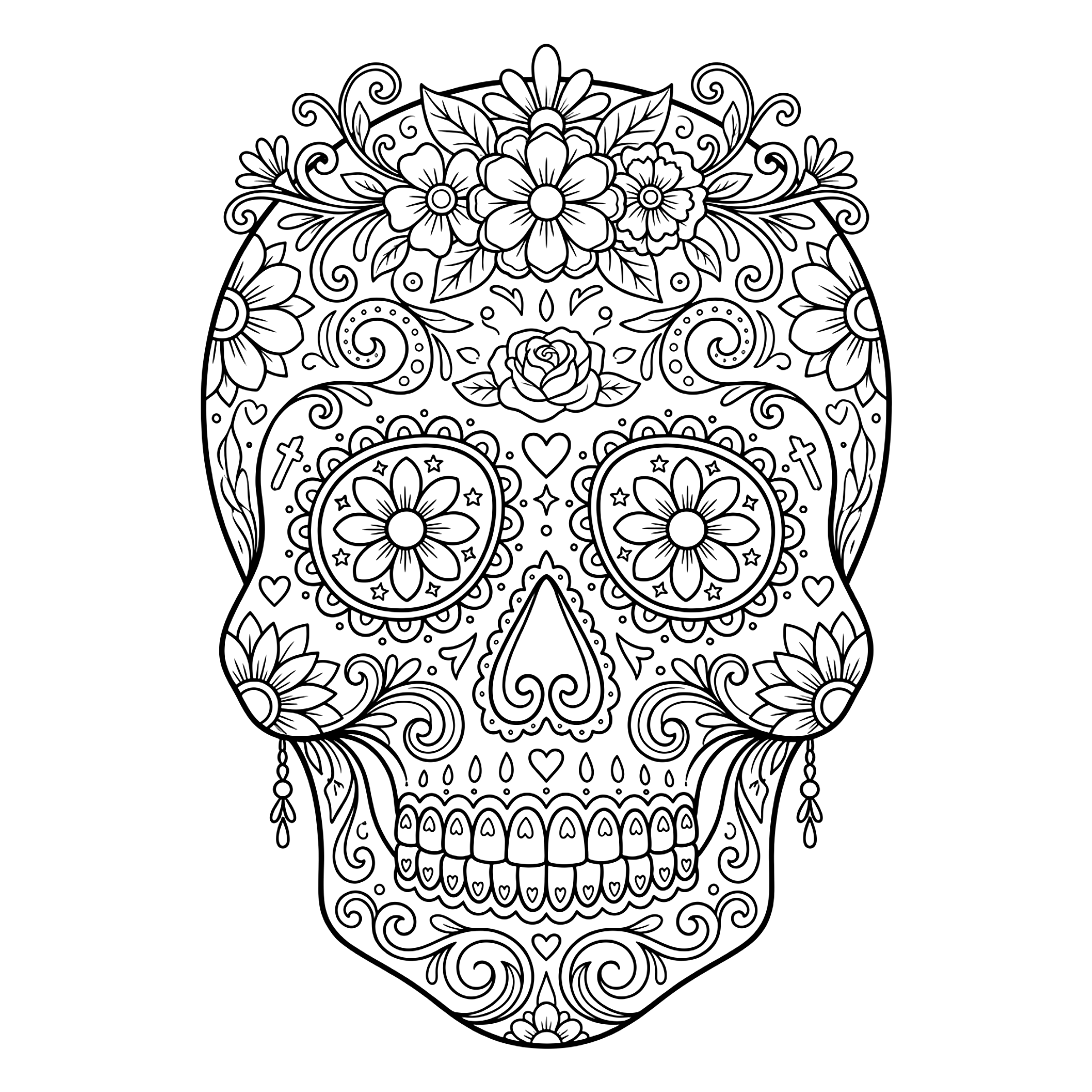
The drawing features a front-facing decorative skull adorned with concentric eye rosettes, curly cheek flourishes, and an ornamental heart centered upon the chin. The brow leaves ample space reminiscent of sugar skull confections where pastry masters pipe the recipient’s name in sparkling icing to commemorate cherished ancestors during family gatherings. Each swirling outline honors the techniques of master sugar confectionery sculptors from Toluca, whose hand-carved clay molds have preserved festive holiday craftsmanship across more than two centuries of culinary history.
Engaging creative exercise for children and teens
With distinct black boundaries and well-proportioned interior shapes, this piece appeals equally to elementary students practicing motor precision and adults seeking decorative relaxation. Exploring mirror symmetry between left and right hemispheres encourages cognitive focus and harmonious color rhythm.
Print settings for clean margins and rich black lines
Formatted in standardized PDF layout, this design prints cleanly on Letter or A4 papers without clipped edges. Setting your printer to actual size with high-density monochrome output preserves the delicate filigree lines for colored pencils, crayons, or pastels.
Coloring strategies for fluorescent icing aesthetics
Embrace a celebratory Mexican folk palette using neon pink, cobalt blue, lime green, and sunburst orange on the piped icing ribbons. To simulate shimmering craft foil, use metallic gel pens along the forehead scrolls and outline the teeth with warm golden highlights against a clean bone-white canvas. To replicate the glossy shine of royal sugar icing, trace metallic gel pens or iridescent fine markers along the outer perimeter of the eye sockets after completing your base pencil layers.
The centuries-old craft of alfeñique candy making
Rooted in ancient Iberian sugar-paste crafts and indigenous seasonal rituals, alfeñique became a cornerstone of autumnal markets in Toluca, Puebla, and Oaxaca. Transforming sugar into smiling skulls reinterprets mortality through sweetness, reminding everyone that love and remembrance endure long after life transitions.