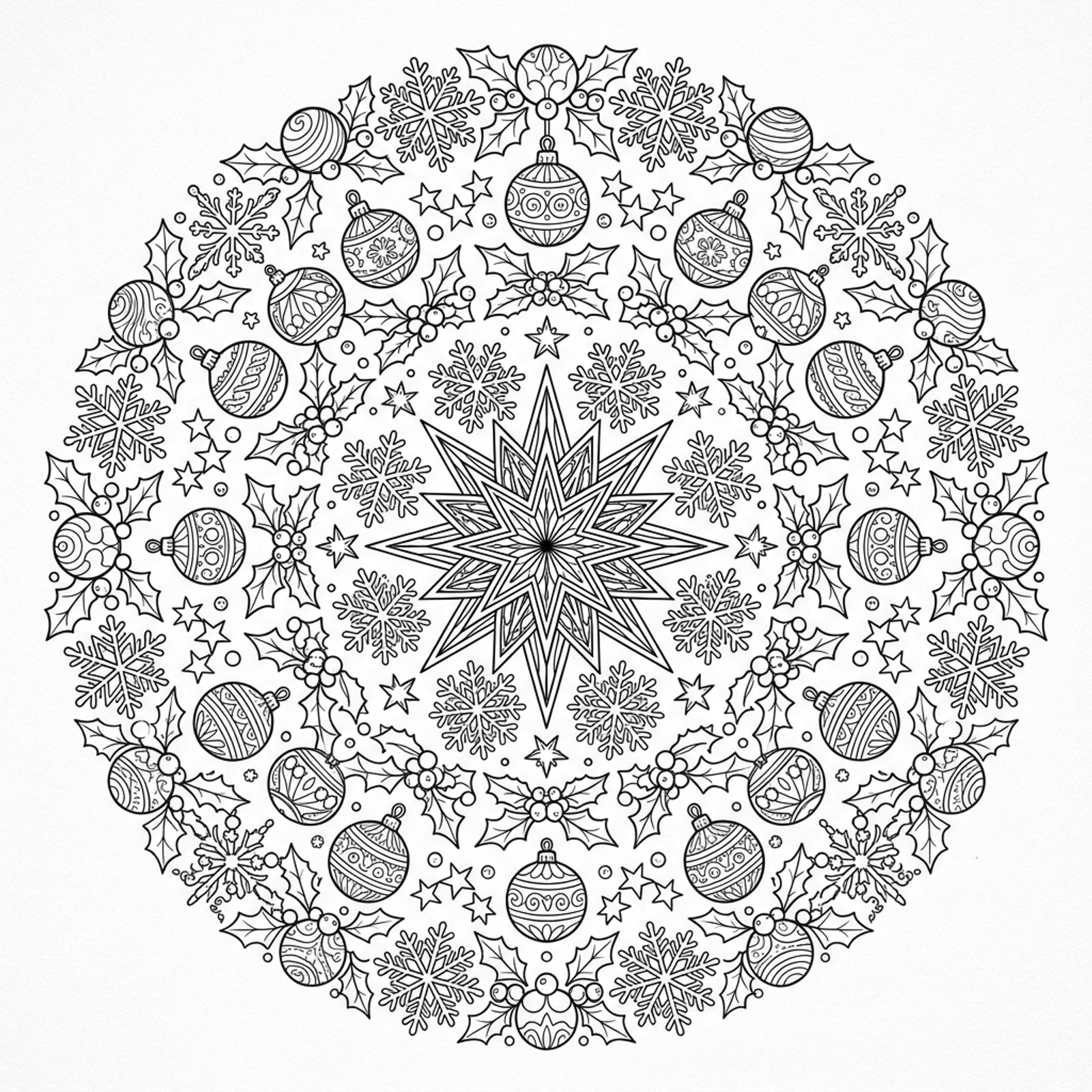
What makes this mandala easy
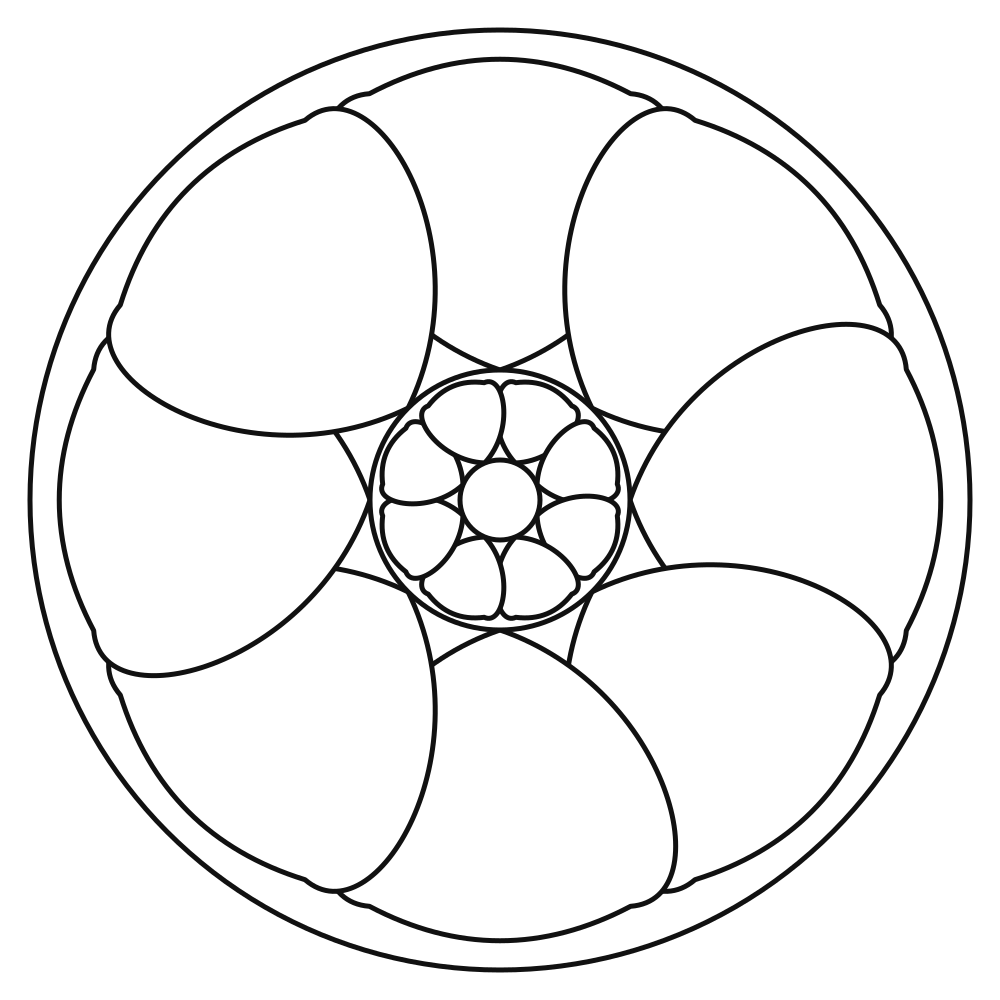
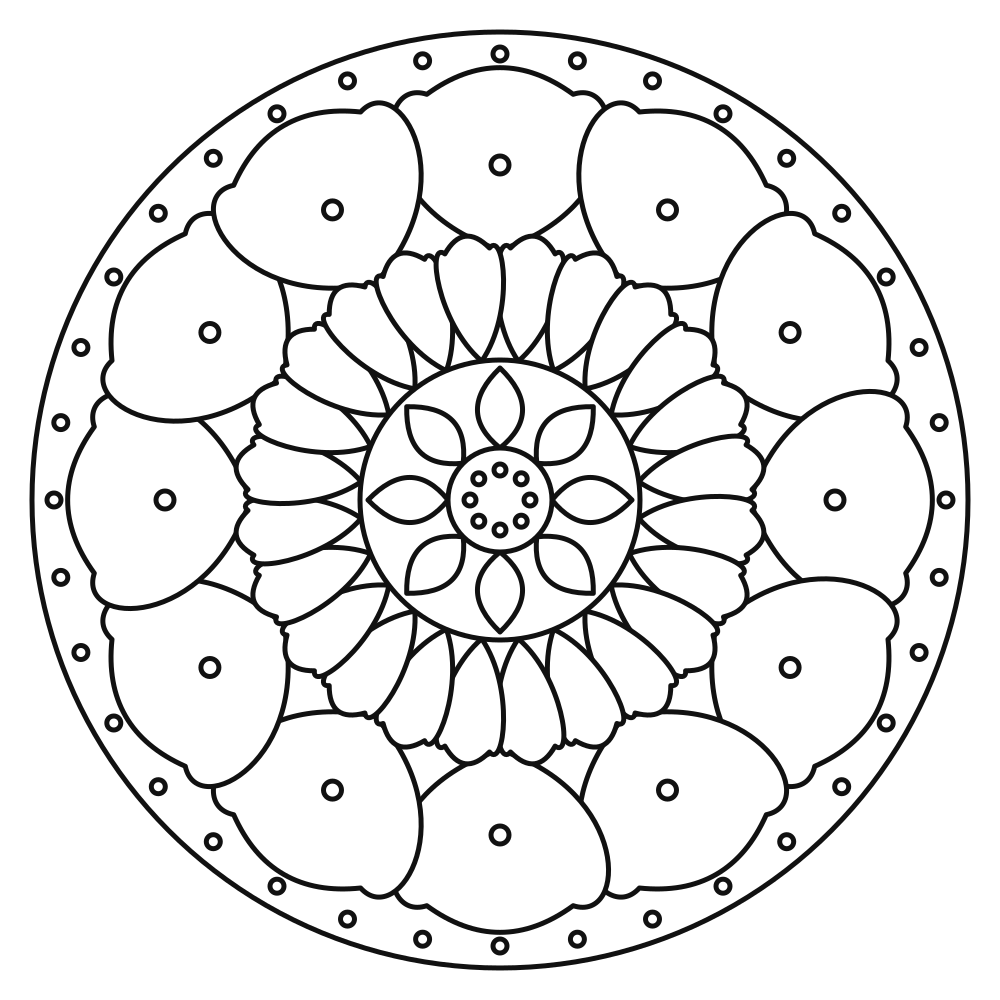
Difficulty in a mandala mostly comes down to the size of its spaces, and here they are generous. The outer circle holds eight wide, rounded petals, and inside it a second ring carries eight smaller petals turned half a step so they sit between the big ones. There are no scattered dots or filler lines that make you lift your pencil every few seconds. It is a gentle way to learn how these designs are built.
Who this page is for
The page is aimed at kids from ten to fourteen who have never colored a mandala, or who simply want to unwind without concentrating hard. A younger sibling can happily join in too, since the big areas forgive a shaky hand. If you already finish medium mandalas without trouble, you may breeze through this one and use it as a warm-up before a bigger project.
Getting a good paper copy
Pick the PDF that matches your paper, Letter or A4, and keep the scale at one hundred percent in the print window. The outlines are bold and clean, so even a basic inkjet in standard mode does the job. Paper a little thicker than regular copy paper helps if you are using markers, because the color is less likely to show through the back.
A color game for one afternoon
Try pairing the petals: every large petal gets one color, and the small petal in front of it gets its opposite on the color wheel. You end up with eight little color duels that look lively with almost no effort. Finish with a dark center circle and leave the background white, or wash it with a pale blue so the petals pop.
Turning a quick page into a longer project
An easy mandala does not have to end after twenty minutes. Print it twice and color one copy in warm shades and the other in cool ones, then hang them side by side to compare. You can also invent your own patterns inside each large petal, such as stripes, dots or tiny leaves, and raise the level a little at a time. By the time the page starts to feel too simple, your hand and your color sense will be ready for the next mandala.