The shapes you will find
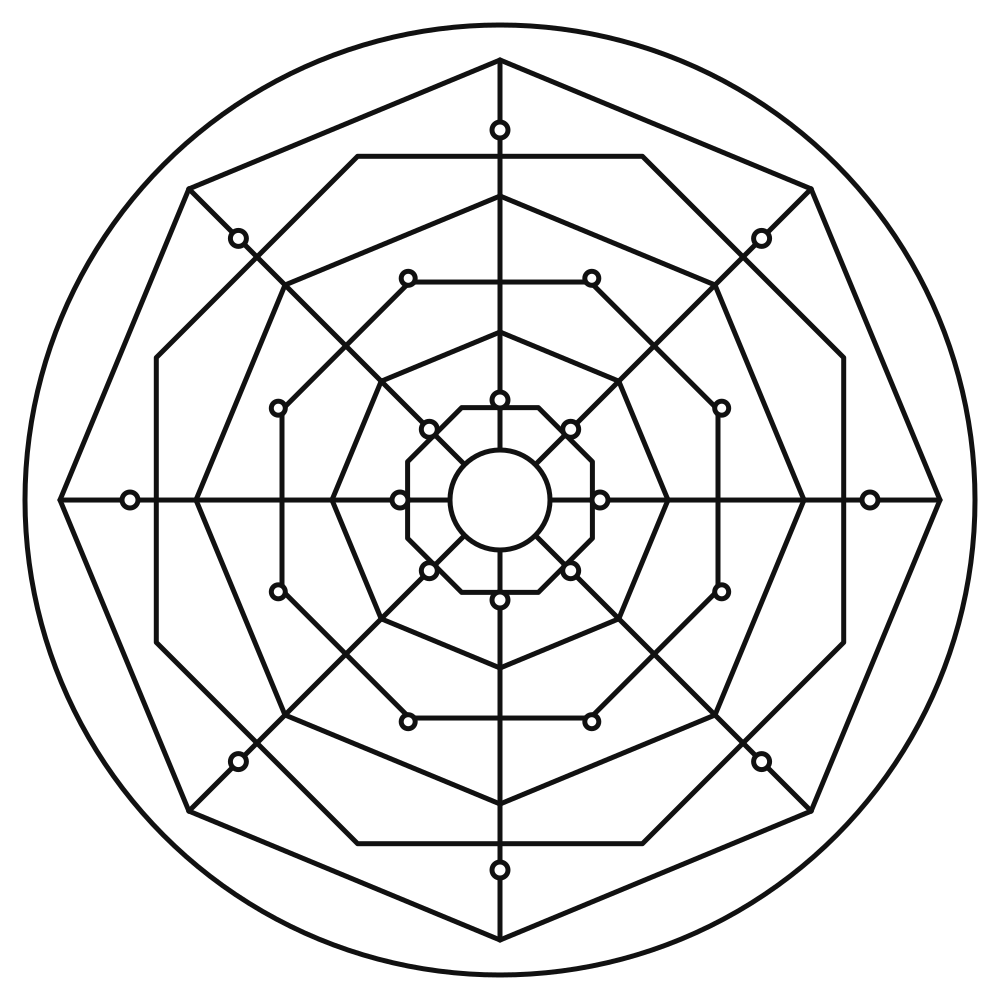
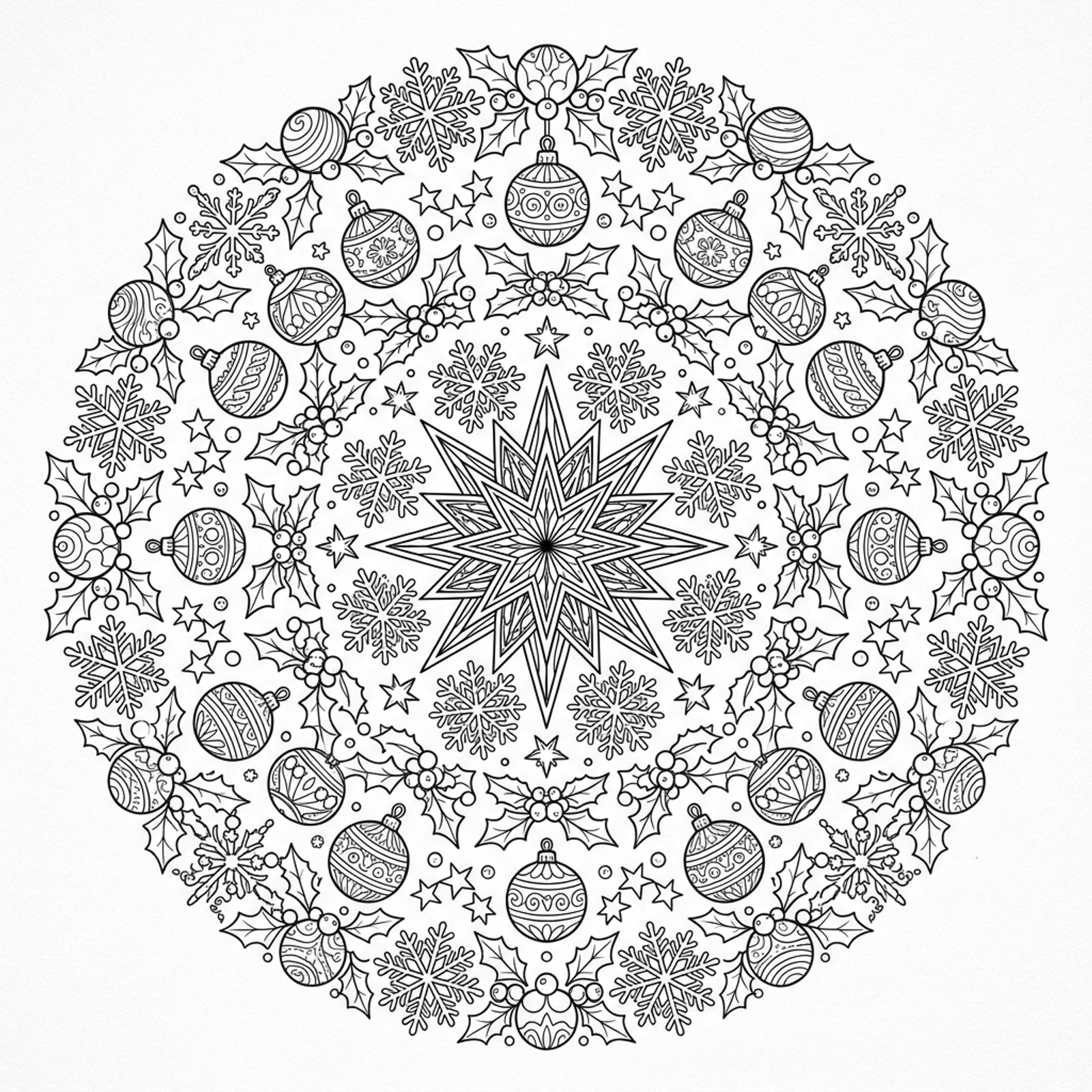
The six octagons take turns rotating, so their corners point up on one layer and sideways on the next. Eight straight spokes cut across them and slice each layer into trapezoid pieces. Between layers, little dots give your eyes a place to rest. Straight lines and sharp angles dominate here, which makes the page feel very different from the soft mandalas built out of petals.
A good fit for older kids
We suggest this page from age twelve up to fourteen and beyond. The pieces are medium and small, and it takes some patience not to skip a trapezoid, so it is not the best first mandala. In return it offers something kids with a mathematical streak adore: watching a simple pattern multiply until it looks complicated.
Paper and print settings
Straight lines show every flaw when printing goes blurry, so choose normal or high quality on your printer. Download the PDF for your paper size, print at full scale, and if you plan to trace edges with a ruler, use smooth paper. Medium to heavy weight is plenty for pencils and fine markers alike.
A color challenge with rules
Set a rule before you start, such as no two touching pieces may share a color. Four colors are enough to manage it, and the mandala quietly turns into a puzzle. Or give each octagon its own shade of one color family, running from light at the edge to deep at the center for a glowing tunnel effect.
What coloring patterns teaches you
Coloring a geometric mandala trains a very useful way of thinking: noticing how a shape repeats, predicting which piece comes next and keeping a color rule going across the whole picture. It is great practice for kids who like math, design or architecture, because it shows symmetry in a visual way. If you work with a friend, each of you can color one half with your own rule and compare the results afterward.