How the design is built
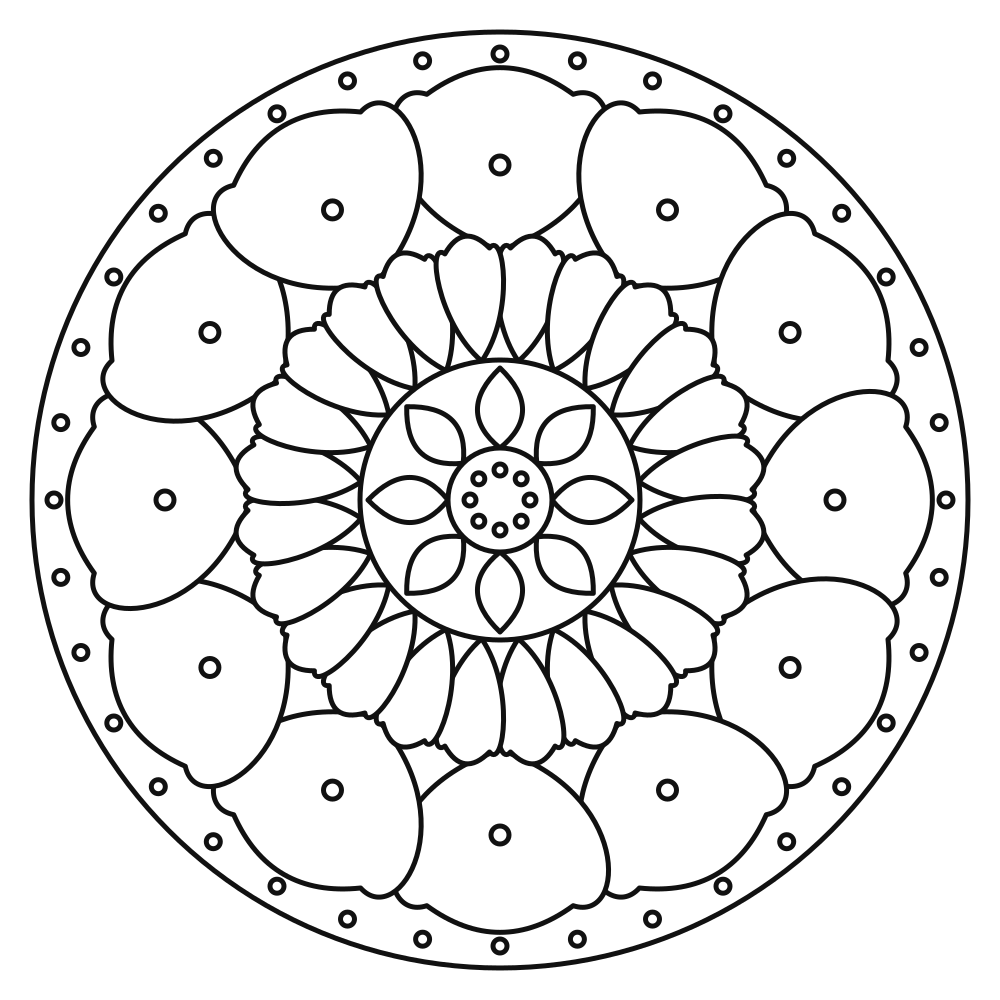
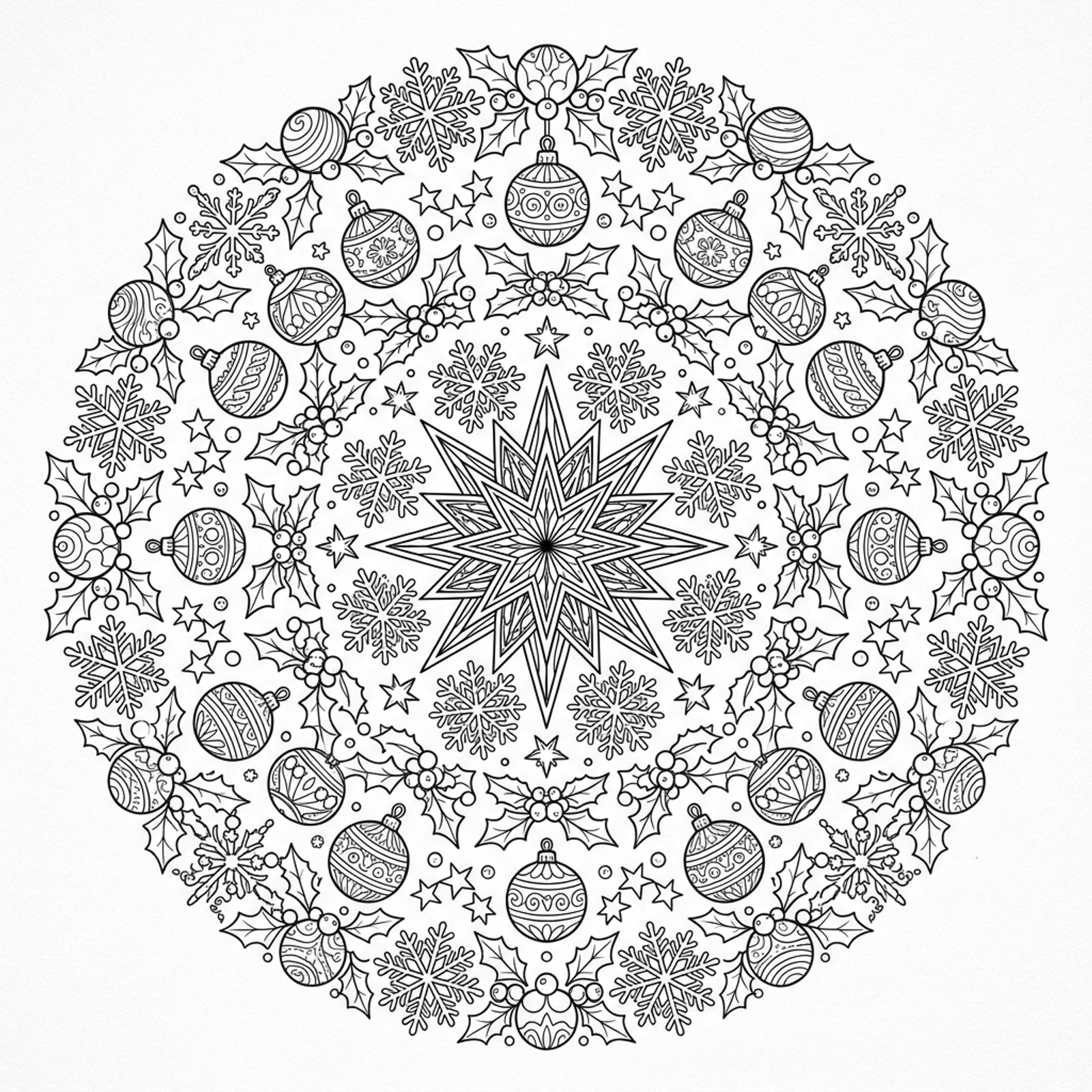
A ring of thirty-six small dots frames the outside edge. Just below it, twelve big petals fan out, each with a dot at its base, and twenty-four narrower petals peek between them. Further in, a circle separates that crown from the heart of the flower, where eight pointed leaves surround one more small circle. The mix of rounded and pointed shapes gives you plenty of ways to play with color.
Which ages enjoy it most
Kids from ten to fourteen tend to like it best, especially after a simple mandala or two. It has many small areas, but none that are truly tiny, so it does not strain your eyes or hand. Older kids in that range can raise the challenge by shading inside each petal or drawing their own patterns in the wider spaces.
Printing tips for crisp lines
Download the Letter or A4 PDF and confirm the scale reads one hundred percent before you hit print. If your printer burns through ink on high quality, standard mode is enough because the line is thin and sharp. Skip the fit-to-page option so the outer petals are not clipped, and keep the margins the file already includes.
An original way to color it
Keep warm shades such as orange, pink and red for the twelve large petals, and cool blues and greens for the twenty-four slim ones. The contrast makes the whole flower seem to shimmer. The eight-leaf center looks lovely in yellow with a tiny red dot in the middle, and the thirty-six border dots can alternate between two colors.
Ways to remix the same design
This mandala supports many different readings. One idea is a summer garden of pink, yellow and orange petals. Another is a night bloom in deep blues and violets with silver glints added by a gel pen. You can also color only the twelve large petals and leave the rest white, which looks very elegant, or try a dark background with light petals. Each version tells a different story with exactly the same lines.